

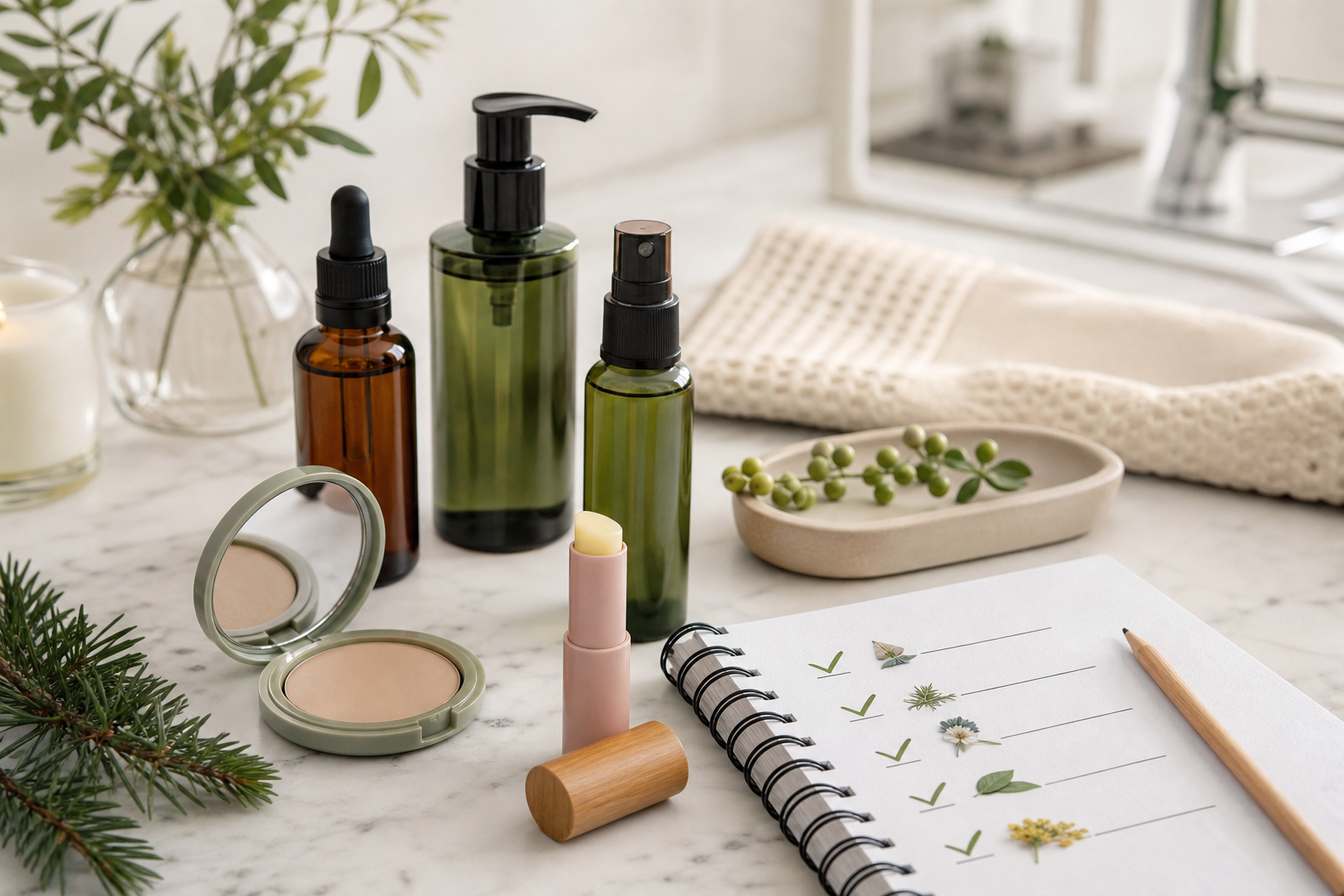
Clean beauty and cruelty-free cosmetics are related, but they answer different questions. Clean beauty usually describes a brand’s approach to ingredients and formulation, while cruelty-free focuses on whether animals were used in testing. Neither claim, on its own, proves that a product is vegan, organic, safer for sensitive skin, or right for your routine.
For Canadian shoppers, the most reliable approach is to separate the claims, read the product information, and assess each item according to its ingredients, intended use, fragrance, and your own skin needs.

Clean beauty is a broad industry term rather than one standardized Canadian regulatory category. A brand may use it to describe ingredient preferences, formulation policies, sourcing choices, or a general commitment to skin-friendly products. The word alone cannot tell you which ingredients are included or excluded.
Cruelty-free cosmetics address animal testing. A cruelty-free claim should communicate that the product, its ingredients, or the brand’s supply chain were not tested on animals according to the brand’s stated standard. In Canada, claims must be supportable, but Health Canada does not impose one universal definition for how businesses must phrase them.
Vegan cosmetics generally avoid animal-derived ingredients, but vegan and cruelty-free are not interchangeable. A product may contain no animal-derived ingredients while requiring clarification about testing, or it may be cruelty-free while containing an ingredient that is not vegan.
Natural and botanical usually refer to the source or character of ingredients. Organic may refer to certified agricultural ingredients or a brand’s own usage. Plant-based suggests that some ingredients come from plants, but does not necessarily mean every ingredient is plant-derived or that the product is vegan.
For more ingredient-focused guidance, see these tips for checking clean beauty ingredients before you buy.

| Claim | What it usually signals | What it does not prove | What to verify |
|---|---|---|---|
| Clean | A brand’s preferred approach to ingredients or formulation | One fixed ingredient standard, guaranteed safety, or better performance | The ingredient list and brand policy |
| Cruelty-free | A position about animal testing | That the product is vegan, organic, or suitable for sensitive skin | The brand’s definition and supporting evidence |
| Vegan | No animal-derived ingredients according to the stated standard | That the product was not tested on animals or contains no irritants | Product-level wording and ingredients |
| Natural | Ingredients or formulation described as naturally derived | That every ingredient is plant-based, safer, or hypoallergenic | Ingredient sources and the complete formula |
| Organic | Organic ingredients or production claims | That the whole product is certified organic | Certification details and scope |
| Plant-based | Some or many ingredients come from plants | That the formula is fully plant-derived or vegan | The ingredient list and product description |
These categories can overlap, but they should not be treated as synonyms. A useful product page explains each claim in concrete language instead of expecting shoppers to infer the entire formula from one label.
Canada’s cosmetics animal-testing ban took effect on December 22, 2023, and covers cosmetics manufactured in Canada and cosmetics imported into Canada. The ban is important consumer protection, but it does not make every cruelty-free marketing statement identical. Health Canada’s cosmetics animal-testing information explains the scope of the ban.
When reviewing a cruelty-free cosmetics claim, look for a clear statement about what it covers. Does it refer to the finished product, ingredients, suppliers, or the entire branded line? If a certification or logo is shown, identify who issued it and what criteria apply. Do not treat a rabbit symbol or general ethical statement as a substitute for understanding the claim.
Canadian businesses must retain proof when their cosmetic labels or advertisements make claims such as “cruelty-free” or “not tested on animals.” Health Canada may request evidence if a claim is suspected to be false. Prefer specific, consistent information over unexplained badges or vague wording. You can also review what to check before buying clean beauty.
Online descriptions can be incomplete or misleading, particularly when a product is presented with several overlapping terms. Health Canada advises consumers to look for a bilingual label and required product information when buying cosmetics online. Its guidance for buying cosmetics online is a useful reference before placing an order.
Terms such as organic, hypoallergenic, preservative-free, and fragrance-free can also be interpreted differently by shoppers. Treat each as a prompt to investigate rather than proof of a guaranteed result.
Once you understand the claims, match the product to the job it needs to perform. A simple routine may prioritize a cleanser and moisturizer, while another shopper may need lip care, eye-area products, complexion colour, or tools for more controlled application.
Start with your skin’s needs, the product’s intended use, and its complete formula. Oria Botanica’s collection includes botanical skincare options such as the Kale Face Cleanser. Its botanical positioning may appeal to plant-focused shoppers, but the ingredient list and directions still matter more than the descriptor alone.
Look for stated ingredients, texture, fragrance information, and application directions. Oria Botanica describes its Active Eye Cream as containing panthenol, safflower oil, cucumber, and aloe extracts, with a lightweight formula positioned for all skin types, including sensitive skin. This information can help you assess fit, but no botanical claim guarantees that every person will tolerate a formula.
If vegan status matters, confirm it on the individual product page. Oria Botanica’s Vegan Lip Balm is described as unscented, plant-oil based, vegan, and cruelty-free. Those product-specific details answer more useful questions than a general clean beauty label, especially for shoppers seeking compact, unscented lip care.
Consider finish, shade flexibility, and application method. Oria Botanica’s Blush Palette is described as a three-shade, buildable option designed for a range of skin tones and undertones. Its Classic Blender is described as latex-free and intended for face-makeup blending, which may matter if you are checking tool materials or want a sponge with different blending edges.
Natural ingredients are not automatically safer, hypoallergenic, or suitable for every complexion. If you have recurring irritation, allergies, or a diagnosed skin condition, review the formula and consider asking a healthcare professional for advice. Patch testing a new cosmetic may also be sensible when the product directions do not say otherwise.
Oria Botanica presents itself as an online clean beauty brand offering botanical skincare, cosmetics, makeup, and beauty tools. The brand states that its branded cosmetics are cruelty-free and not tested on animals, and that its entire branded line is made in North America. These are useful brand-level details, but they do not replace checking each product’s information.
The Vegan Lip Balm has an explicit product-level vegan and cruelty-free description, while the Active Eye Cream provides named ingredients and a stated sensitive-skin positioning. The Kale Face Cleanser represents the skincare collection, while the blush palette and Classic Blender address colour cosmetics and application. Together, these examples show why shoppers should assess both ethical claims and practical purpose for each item.
When reviewing natural makeup selection criteria, ask whether the product’s shade, finish, ingredients, and application method suit you. A clean or cruelty-free position can be part of the decision, but should not replace product fit.
No. Cruelty-free refers to animal testing, while vegan generally refers to the absence of animal-derived ingredients. Check both claims separately.
There is no single standardized Canadian definition of clean beauty. Review the brand’s stated standards and complete ingredient list rather than assuming the term has one fixed meaning.
No. Botanical and natural ingredients can still cause irritation or an allergic reaction. Assess the complete formula, follow directions, and seek professional advice for persistent concerns.
Look for a specific brand or product statement, understand what the claim covers, and check whether supporting evidence or certification criteria are explained. Canadian advertising claims must be substantiated if requested by Health Canada, as described in its guidance on cruelty-free claims.
Check the ingredient list, intended use, directions, warnings, fragrance information, product-level vegan or cruelty-free wording, and access to required Canadian label information. If a key detail is missing, contact the seller before buying.
Clean beauty and cruelty-free cosmetics are not competing labels. Clean beauty usually describes a formulation approach, while cruelty-free addresses animal testing. Vegan, natural, organic, and plant-based add further information, but each needs to be assessed separately.
The strongest buying decision combines verifiable claims with practical fit. Read the ingredients, confirm product-level wording, check Canadian label information, and choose according to your skin, fragrance preferences, routine purpose, and makeup habits. Oria Botanica offers an online range of botanical skincare, cosmetics, makeup, and beauty tools for shoppers who want to explore those options in one collection.
To review the available skincare, cosmetics, and beauty essentials, visit Oria Botanica.