

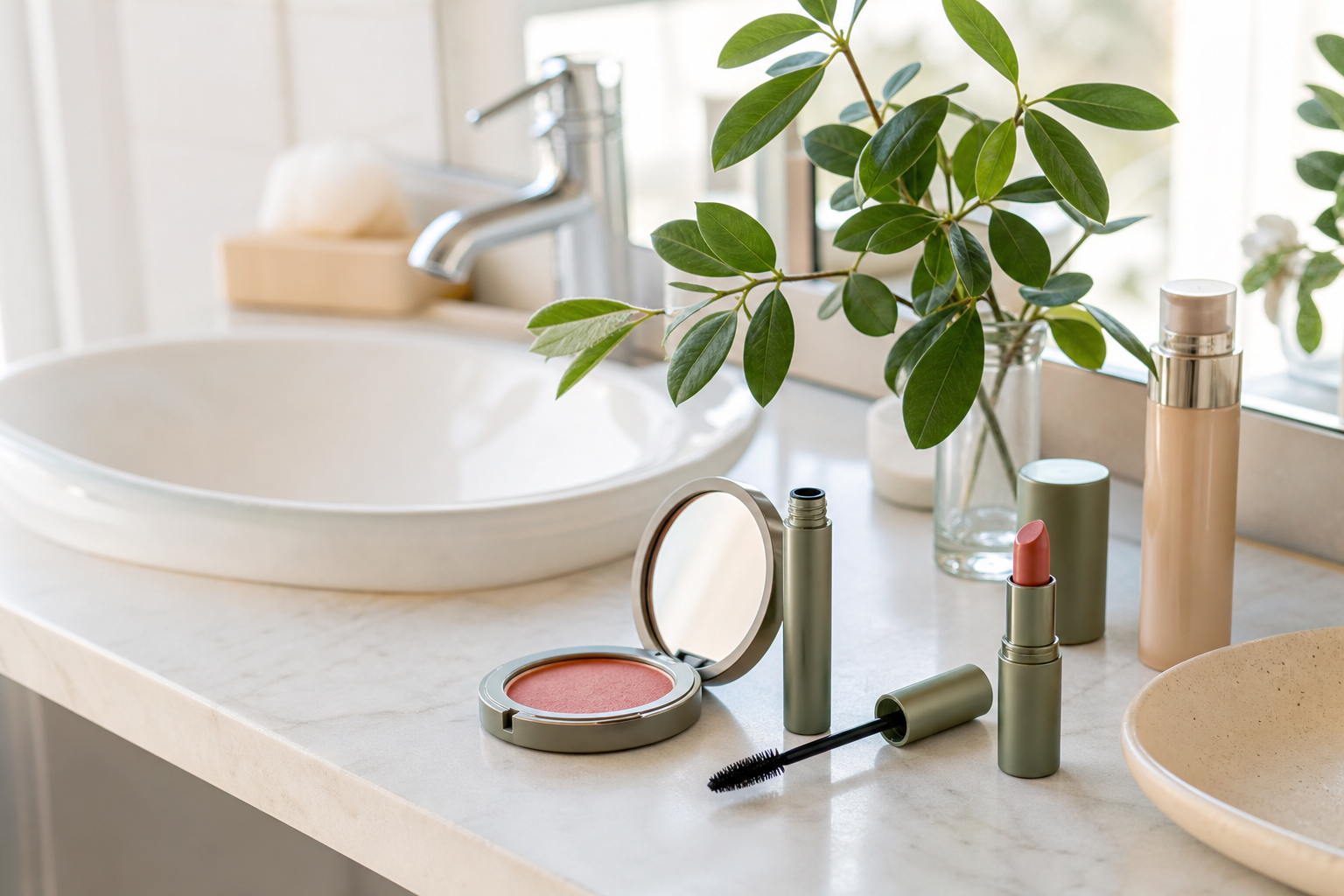
Natural makeup usually describes products positioned around natural-origin or botanical ingredients, simpler formulas, or a skin-conscious beauty approach. However, the phrase alone does not confirm that a product is organic, vegan, cruelty-free, hypoallergenic, or suitable for every skin type.
There is also an important difference between natural makeup products and natural-looking makeup. The first concerns how a product is positioned or formulated, while the second describes the finished appearance. Understanding that distinction makes it easier to compare claims and build a routine that suits your preferences.
Natural makeup is generally used for cosmetics that emphasize natural-origin, botanical, minimal, or skin-conscious formulation choices. Some brands use the term to highlight plant-derived ingredients, while others use it to describe a broader approach to formulation.
Because the term can be used in different ways, treat it as a starting point for investigation rather than a complete product standard. A natural makeup claim does not tell you whether every ingredient is naturally derived, whether the product is certified organic, whether it contains fragrance, or whether it will suit your skin.
Start with the product-specific ingredient list and examine supporting claims separately. This explanation of how organic makeup products differ can help clarify the distinction between organic claims and broader natural positioning.

Searches for natural makeup can reflect two different needs. One shopper may be comparing botanical or ingredient-conscious cosmetics. Another may simply want makeup that looks subtle, fresh, and close to their natural skin.
This phrase focuses on the product. Shoppers may be comparing ingredients, certifications, animal-testing policies, sourcing, or brand standards. The finished look could be sheer and understated, or bold and highly defined.
This phrase focuses on appearance. A natural-looking routine often uses light or buildable coverage, softly blended colour, a skin-like finish, and restrained definition. A product can create that effect without being marketed as natural makeup, and a natural-positioned product can still produce a dramatic look.
Oria Botanica is an online retailer serving the product-shopping interpretation rather than a local makeup-artist service. Its categories include face, lips, eyes, cheeks, skincare, and tools and applications. These natural makeup tips for a fresh, skin-first look can help with application as well as product selection.
These terms may appear together in beauty marketing, but they answer different questions. A product may meet one expectation without meeting all of them.
| Claim | What it helps you investigate | What it does not automatically confirm |
|---|---|---|
| Natural | Whether the brand emphasizes natural-origin, botanical, or minimally positioned ingredients. | That every ingredient is natural, organic, vegan, or suitable for sensitive skin. |
| Clean beauty | The brand’s stated approach to ingredients and formulation standards. | A universal ingredient list or an irritation-free guarantee. |
| Organic | Whether particular ingredients or products meet an organic standard or certification. | That the complete finished product is entirely organic. |
| Vegan | Whether the product contains no animal-derived ingredients. | That it is natural, organic, or cruelty-free. |
| Cruelty-free | Whether the brand or product policy addresses animal testing. | That the formula contains no animal-derived or synthetic ingredients. |
Verify each ethical claim separately. This explanation of what cruelty-free face makeup means can help distinguish animal-testing policies from ingredient-based claims.
Consider known sensitivities, fragrance preferences, allergies, and ingredients you deliberately avoid. Natural-origin ingredients can still be unsuitable for an individual, so “natural” should not replace personal ingredient screening or professional advice for a diagnosed concern.
If organic, vegan, cruelty-free, or certified claims influence your purchase, look for the specific standard, certification, or policy behind the wording. Treat broad phrases such as “pure,” “green,” or “clean” as prompts to investigate rather than proof of a particular formula.
A brand may offer skincare, makeup, tools, and different formula types with different ingredients and performance. Check the individual product details for shades, finish, intended use, ingredients, and directions. Do not assume that one product’s attributes apply to the entire collection.
Natural makeup can be sheer, buildable, dewy, satin, or matte. The word “natural” does not tell you how much coverage a product provides or how long it will wear. Choose based on the result you need.
Sheer coverage can let more of your skin show and may suit a quick daytime routine. Buildable coverage offers more control, allowing a light application first and additional product where you want more colour or definition.
Dewy finishes can create a fresh, luminous appearance, while powder or matte finishes can look more softly set. Your choice may depend on your skin’s appearance, the climate, the occasion, and how much touch-up you are willing to do.
One product-specific example is the PHOFAY Double-Take Cream & Powder Blush Duo. The supplied product information describes a dewy cream formula paired with powder to help set and extend wear, with buildable colour, blendability, multiple shades, and suitability for all skin types. These are details of that product, not universal characteristics of natural makeup.
A natural-looking routine does not need every available product. Begin with the result you want, then add only categories that support it.
For a more structured sequence, see how to build a clean beauty makeup routine, then adapt it to the products and finishes you prefer.
No. Natural makeup may refer to natural-origin or botanical positioning, while organic makeup requires investigation of sourcing or certification. The terms are not interchangeable.
Not automatically. Suitability depends on the complete formula and your individual sensitivities. Review the ingredient list and seek professional guidance for persistent or diagnosed concerns.
Natural-looking makeup describes the result, such as soft, sheer, blended, or skin-like. Natural makeup products describes how products are positioned or formulated. One concerns appearance; the other concerns product characteristics.
Check each claim separately. Cruelty-free generally concerns animal-testing policy, while vegan concerns animal-derived ingredients. Look for a clear product or brand statement and relevant certification.
Natural makeup is best understood as a starting point for comparison, not a promise that every formula is organic, vegan, irritation-free, or suitable for every shopper. Separate the product claim from the look you want, then evaluate ingredients, ethical policies, finish, coverage, shade, and format one product at a time.
Oria Botanica offers an online cosmetics and makeup collection spanning face, lips, eyes, cheeks, skincare, and beauty tools. To browse the available range and compare products for your routine, visit Oria Botanica.