

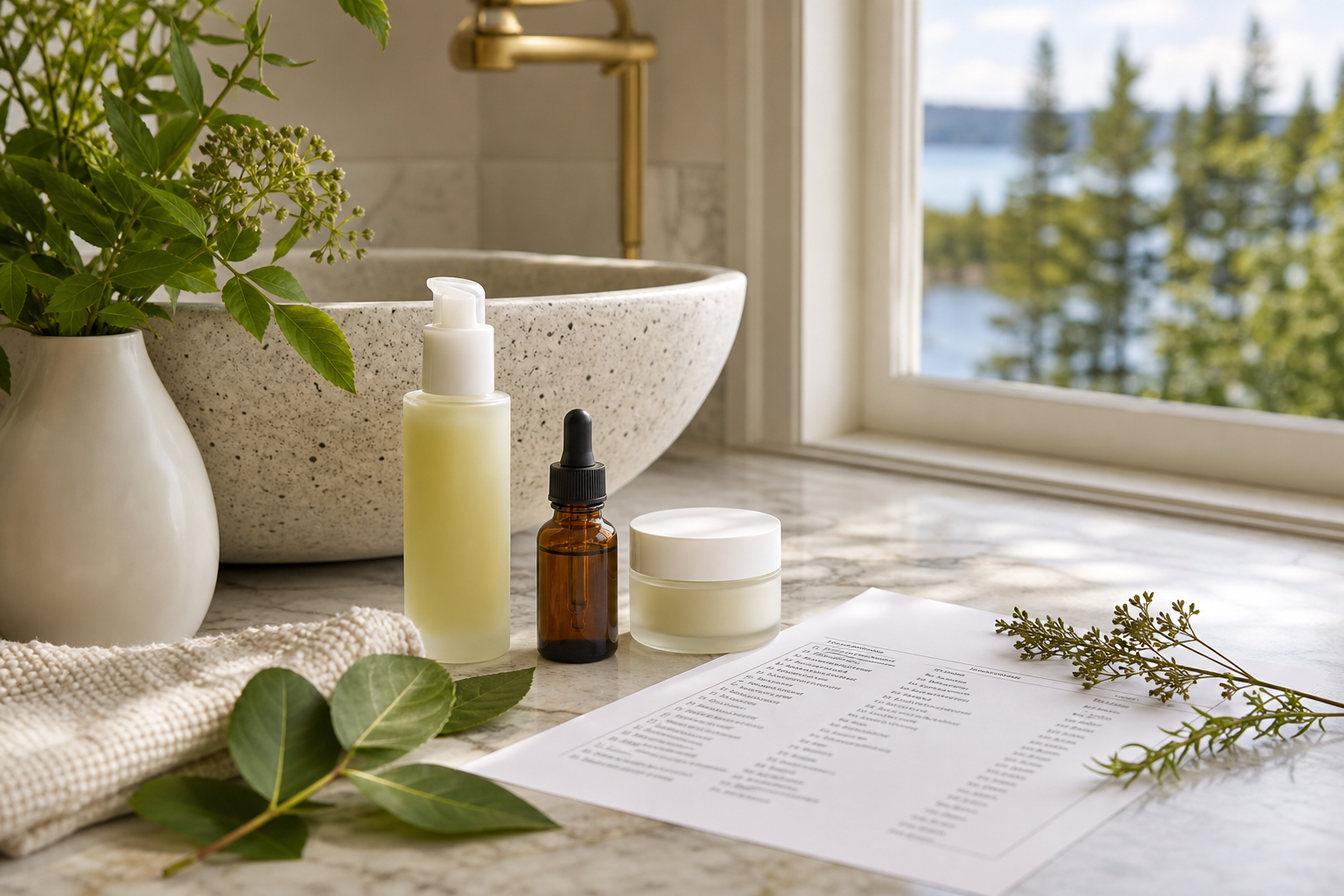
Organic skincare can be a useful starting point when you want products made with plant-derived or organically sourced ingredients, but the word alone does not tell you whether a product is certified, suitable for your skin, or safer than every alternative. In Canada, cosmetics are outside the Canada Organic Regime, so shoppers need to look beyond front-label wording.
This guide explains what organic skincare means in the Canadian market, how it differs from natural, botanical, clean, and cruelty-free claims, and how to assess a product before buying. It also shows how to build a simple routine with cleanser, moisturizer, serum, oil, or body care without introducing too many products at once.

In everyday shopping language, organic skincare generally refers to products that contain ingredients described as organic or produced according to an organic standard. However, standards and certification systems can differ by jurisdiction. Health Canada identifies “organic” as a cosmetic marketing term rather than a single, universal guarantee about the finished product. Canadian guidance on cosmetic advertising and ingredients is therefore a useful reference when a product makes a broad organic claim.
The distinction is especially important in Canada. Cosmetics are outside the Canada Organic Regime, which means they cannot be certified under that regime or bear the Canada Organic Logo. A skincare product may still use organic ingredients or refer to an organic standard, but the shopper should identify which ingredients, percentage, or certification the claim actually concerns. The Canadian Organic Regime’s scope confirms this limitation.
That does not make the term meaningless. It means “organic” should be treated as one claim to investigate, not as a shortcut for safety, effectiveness, hypoallergenic performance, or environmental responsibility. For a more detailed buying framework, see this guide to assessing organic skincare claims.

Beauty labels often combine several appealing terms. The most useful question is not which word sounds best, but what the word is intended to communicate and what evidence supports it.
| Claim | What it may communicate | What to verify |
|---|---|---|
| Organic | Some ingredients may be produced under an organic standard. | Which ingredients qualify, what standard applies, and whether a certifier is named. |
| Natural | The formula may emphasize ingredients from natural sources. | The product’s full ingredient list and the brand’s definition of “natural.” |
| Botanical | The formula includes plant-derived ingredients or extracts. | The specific plants used, their place in the ingredient list, and any allergy concerns. |
| Clean | The brand is signalling a preferred approach to ingredients or formulation. | The brand’s actual standards, exclusions, and complete ingredient disclosure. |
| Cruelty-free | The brand or product is associated with a no-animal-testing policy. | Whether the claim applies to the whole line, finished product, ingredients, or a named certification. |
These terms answer different questions. Organic focuses on how certain ingredients are produced or represented. Botanical focuses on plant content. Cruelty-free concerns animal testing, not organic certification. Clean is often a brand-defined positioning term, so its meaning can vary considerably.
Do not assume that a botanical or natural ingredient is automatically gentle. Plants can contain substances that irritate skin or trigger an allergic response, and ingredient source alone does not determine cosmetic safety. The FDA makes the same point in its guidance on organic cosmetics and ingredient safety.
Use the following process whenever you compare organic skincare products online or in a shop. It helps separate a meaningful claim from a vague promise.
Do not rely only on the product name, front label, or highlighted hero ingredient. The full ingredient list gives you a better view of the formula and helps you compare products consistently. If the list is unavailable, contact the seller or choose a product with clearer information.
Look for wording that explains whether the claim applies to the entire formula, selected ingredients, or the production method. Check whether a certifier or standard is named. “Made with organic ingredients” is narrower than “certified organic,” and neither should be assumed when the label does not explain the basis of the claim.
Words such as pure, safe, clean, non-toxic, and natural may express a brand position, but they do not replace ingredient information. Canadian cosmetic rules require products to be safe, and claims about effects on skin chemistry or product performance need supporting evidence. You can review Health Canada’s cosmetic requirements and the Cosmetic Regulations when a claim sounds unusually broad or results-focused.
Natural fragrance, essential oils, botanical extracts, and preservatives can all matter if your skin is reactive. Compare the ingredient list with substances you already know you do not tolerate. If the seller does not provide enough information to make that comparison, pause before purchasing.
A facial cleanser, leave-on serum, face oil, and body butter have different roles and directions. Do not assume that a product designed for the body belongs on the face, or that a concentrated leave-on product should be used as frequently as a cleanser.
Check how much to use, how often to apply it, whether it should be rinsed, and whether the product has storage instructions. Claims about visible results should not distract from basic use and safety information.
The same evaluation habit applies to other products: compare specific information about ingredients, texture, freshness, and intended use rather than relying on a broad quality adjective. For example, buyers assessing a different ingredient-led product category can use this framework for comparing freshness, texture, and quality.
A routine does not need every product category. Start with the role you want to fill, then add one targeted product only when you can explain why it belongs there.
A cleanser removes surface residue and prepares the skin for the rest of the routine. Choose one that matches your preferred texture and intended use, then follow its directions rather than assuming that longer cleansing produces better results. Oria Botanica lists a Kale Face Cleanser among its botanical skincare products, making it an example of the cleanser category to assess by ingredients, directions, and personal suitability.
A moisturizer or body product can be the simplest next step when your priority is reducing the feeling of dryness and improving skin softness. Oria Botanica’s Shea Body Butter is described as containing 8% fair trade shea butter and as being intended to moisturize and soften skin. Treat that as product information to consider, not a guarantee that it will suit every person or every area of the body.
A serum is optional. Consider one when you have a clearly defined preference, such as adding a targeted step to your routine, and review its ingredients and directions before use. Oria Botanica lists a Collagen and Retinol Serum, but the name alone is not enough to determine whether it fits your routine. Review the product details and introduce it separately from other new products.
Face oils can appeal to shoppers who prefer a richer finishing step, but they are not essential for everyone. Check the oil’s intended area, ingredient list, and directions. If you are trying a cleanser, serum, and oil at the same time, it becomes difficult to identify which product is responsible for either improvement or irritation.
Oria Botanica describes its collection as spanning botanical skincare, cosmetics, and beauty essentials. Its range can help a shopper browse by product type, but a complete routine should be built around personal needs, preferences, and tolerance rather than the number of products available.
“Organic” and “botanical” do not mean irritation-proof. Canadian health information notes that cosmetic ingredients can cause sensitivity or allergy, ranging from mild irritation or itchiness to more serious reactions. A patch test can provide an early indication of sensitivity, although it cannot guarantee that a product will never cause a reaction.
Apply a small amount as directed to a limited area and observe it before using the product more broadly. Follow the product’s own instructions, especially for leave-on formulas and products used near the eyes. Introduce one new product at a time where practical, and stop using it if burning, persistent redness, swelling, or other concerning irritation develops. Seek professional medical advice for a severe or ongoing reaction.
Keep expectations realistic. Organic or plant-derived ingredients do not automatically make a product more effective, and a cosmetic should not be treated as a substitute for medical care. If a product makes a treatment-style claim, check whether the product category and supporting information are appropriate for that claim.
This checklist is also useful for comparing products that use different marketing language. A product with a narrower, well-explained claim may be a more informed choice than one with several broad claims and little supporting detail.
No. Cosmetics are outside the Canada Organic Regime, so they cannot be certified under that regime or carry the Canada Organic Logo. A cosmetic may still contain organic ingredients or refer to another standard, but the label should explain what the claim means.
No. Botanical means that a formula includes plant-derived ingredients or extracts. Plant ingredients can still irritate skin or trigger an allergy, so review the ingredient list and consider a cautious patch test.
No. Clean beauty is generally a brand-defined approach to ingredients or formulation, while organic refers to how certain ingredients are sourced or represented. A clean beauty claim does not by itself prove organic certification.
Start with the complete ingredient list and the exact wording of the organic claim. Then check whether a standard or certifier is named, whether the product is intended for your chosen area, and whether the directions and warnings are clear.
Read the directions, patch test where appropriate, and add one new product at a time. Use it as directed and stop if it causes concerning irritation. Introducing products gradually makes it easier to identify what your skin does and does not tolerate.
The best organic skincare decision is not based on the most persuasive front-label word. In Canada, cosmetics cannot use the Canada Organic Logo, and terms such as organic, natural, botanical, clean, and cruelty-free describe different attributes. Compare the exact claim with the ingredient list, directions, certification information, and your own sensitivities.
Start with one practical product category, such as a cleanser or moisturizer, then add optional serums or oils only when they have a clear place in your routine. Oria Botanica offers a botanical skincare collection that includes cleansers, serums, and body care for shoppers who want to compare these categories in one cosmetics online store. Explore the skincare range from Oria Botanica, and apply the checklist before choosing products for your routine.