

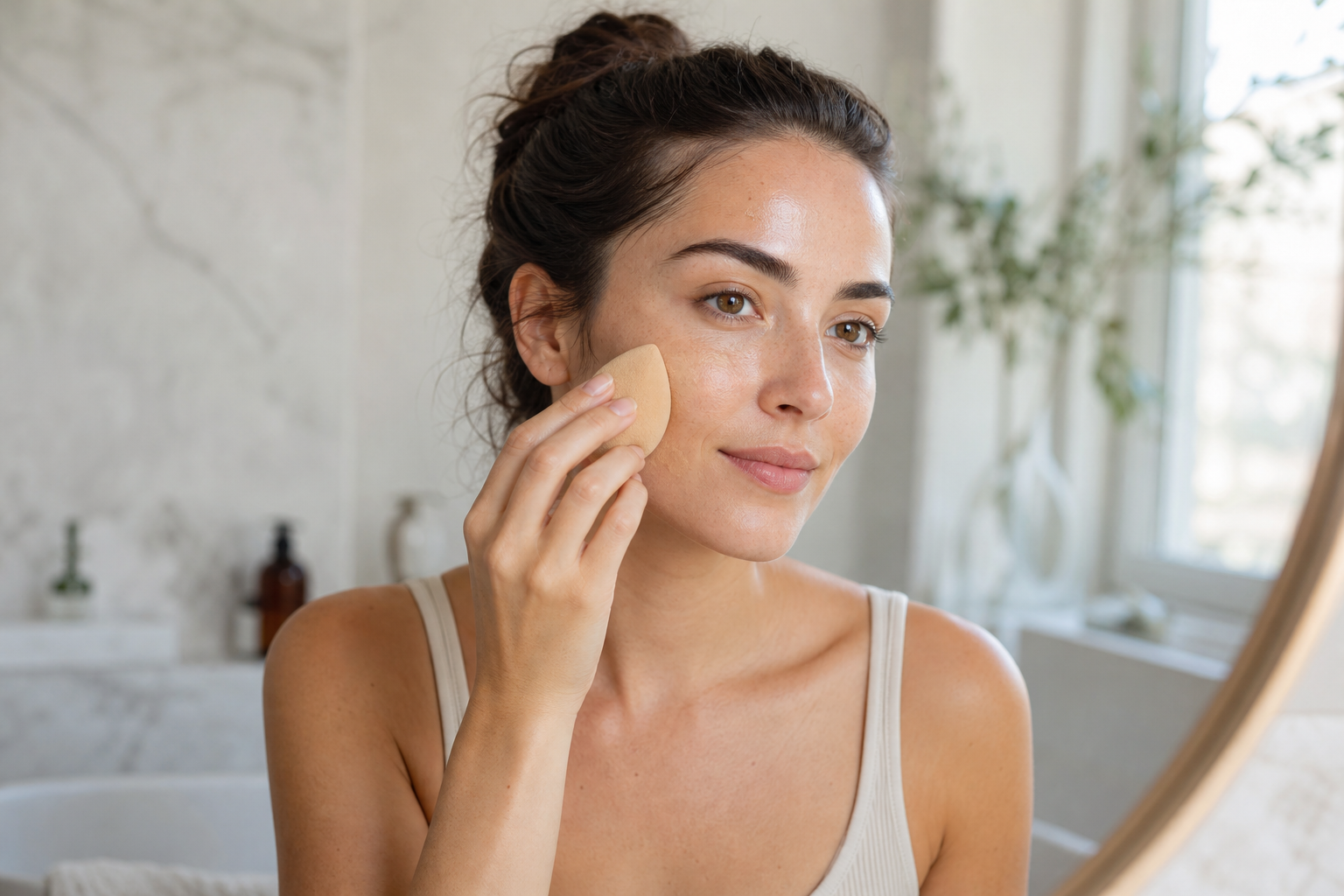
Natural makeup application is less about using fewer products and more about controlling how much you apply. A soft, skin-like look usually comes from thin, buildable layers, targeted coverage, and colour that fades gently into the surrounding skin instead of stopping at sharp edges.
The routine below takes you from preparation and base to cheeks, eyes, lips, and setting. It also explains when to choose sheer or buildable coverage, how to use brushes effectively, and how to correct common problems without adding more product.
A natural makeup look aims to even out the appearance of the complexion while allowing some believable skin texture to remain visible. It can add warmth, colour, and definition without relying on heavy coverage, strong contour, or highly contrasted eye makeup.
This is not necessarily the same as “no-makeup makeup.” A no-makeup look may be extremely minimal, while natural makeup can still include base, concealer, blush, bronzer, mascara, and lip colour. The difference is usually the finish: each element is applied lightly and blended so the overall result looks balanced rather than dramatic.

Before applying anything, decide how much coverage and definition you actually need. A sheer base may be enough to even out the centre of the face, while buildable coverage gives you more control if some areas need a second light layer. Either option can look natural when you apply it gradually.
For cheeks, choose a colour that can be built in small increments. Oria Botanica describes its three-shade Blush Palette as a buildable formula for creating anything from a subtle flush to a more defined look. The brand’s page also states that the palette is made in North America.
Tools affect how concentrated the colour appears. A large, fluffy brush spreads powder broadly and softly, while a smaller or denser tool places product more precisely. Oria Botanica’s Cheek Fan Brush is described for applying blush, contour, or highlighter along the cheekbones, hairline, and jawline with a softly gradient effect.
| Choice | Useful when | Tradeoff |
|---|---|---|
| Sheer coverage | You want skin to remain highly visible and only minor evening-out. | It may not cover areas that need more targeted correction. |
| Buildable coverage | You want to start lightly and add coverage only where required. | Too many layers can become heavy or uneven. |
| Cream products | You prefer a flexible, skin-like application that can be tapped into place. | They may need careful layering with other textures. |
| Powder products | You want controlled placement and a soft finish on selected areas. | Too much powder can make the complexion look flat or dry. |
| Fluffy brush | You want diffused colour across a wider area. | It offers less concentrated placement. |
| Targeted tool | You need precision around the cheeks, eyes, or other small areas. | It can deposit too much product if you do not tap off excess. |
Begin with clean, comfortable skin and allow any skincare or primer you use to settle before applying makeup. The goal is not to create a thick, perfectly blank surface. It is to give your base a more even starting point so you can use less product overall.
Apply a small amount of base to the centre of the face first, then blend outward toward the hairline and jaw. Use tapping or short, controlled strokes rather than repeatedly rubbing the same area. Pause before adding more. If the skin already looks even enough, leave it alone and reserve extra coverage for concealer.
Targeted concealer helps preserve a natural finish because it avoids covering the entire face with another layer. Place a small amount only where you want additional evening-out, then tap the edges until they merge with the base.
Use less than you think you need at first. A second thin application is easier to control than one generous layer, and tapping keeps the product concentrated instead of moving it away from the area you intended to cover.
Start blush on the part of the cheek where you want the most colour, then blend outward and slightly upward. Keep the strongest concentration close to the centre of the placement and soften the outer edge. This creates definition without leaving a visible stripe.
A buildable blush palette can help you add colour gradually rather than committing to an intense first application. Begin with one light layer, assess the balance with the rest of the face, and add another only if the colour has disappeared too much.
For powder blush, tap excess off the brush before touching the face. If the edge looks harsh, use a clean fluffy brush to diffuse it, or lightly pass the same brush used for your base over the boundary. Avoid correcting a strong blush by adding more powder directly on top, as that can make the area look thick.
Use bronzer where warmth would naturally appear, such as across the upper cheeks and forehead. Keep the first pass light and blend before deciding whether more is needed. Bringing a small amount across connected areas usually looks more natural than creating two dark patches on the cheeks.
Oria Botanica’s Bronzer page lists multiple shades and describes applying the product across the cheeks and forehead. It also states that this specific product is paraben- and talc-free. That information applies to the product described on that page, not automatically to every cosmetic in a collection.
To avoid over-bronzing, compare both sides of the face in ordinary lighting. If the colour looks obvious before you have added the rest of your makeup, soften it with a clean brush or a small amount of your base product rather than layering more powder.
For everyday eyes, choose a neutral shade close to your natural depth and apply it with a light hand. Concentrate colour near the lash line or crease, then soften the transition so there is no hard block of pigment. A gently smudged line often suits a natural look better than a sharply extended wing.
When you need more control, a packing brush can place colour precisely on the lid, while a crease brush can soften the transition above it. You can find more focused guidance on controlled eyeshadow placement and softening crease colour without changing the rest of the routine.
For brows, follow their existing shape with short strokes rather than drawing one continuous, heavy line. Brush through the colour afterward to remove visible marks. Mascara can be kept natural by concentrating the product at the roots and using only enough on the lengths to define the lashes.
Primer can create a smoother starting surface for colour and may be useful when eyeshadow or lip colour tends to move during wear. Oria Botanica describes its Eye And Lip Primer as a sheer, creamy formula for lids and lips intended to support longer-wearing colour and reduce creasing.
Apply a thin layer and allow it to settle before adding colour. More primer is not automatically better. Excess product can leave the surface too slippery or cause colour to gather in folds, so use only enough to create an even base.
Choose a lip shade that complements the warmth and depth already used on the cheeks. For a soft result, apply colour from the centre of the lips outward, then press the lips together or soften the perimeter with a fingertip or small brush.
If your lips need comfort, begin with a light layer of balm and remove any excess before applying colour. A close-to-natural shade can be worn on its own, while a slightly deeper tone can add definition without requiring a sharply drawn outline.
Setting powder should support the finish, not replace the blending work underneath. Apply it selectively where makeup tends to move or where you prefer less shine. Leave other areas with their natural dimension if they already look balanced.
Oria Botanica’s Finishing Powder page describes using a fluffy brush to dust powder over the face for a natural finish, or a damp sponge for targeted application. The fluffy brush is useful when you want a light veil, while a targeted tool is better when only a small area needs additional setting.
Cosmetics sold in Canada must be safe to use and comply with the Food and Drugs Act and the Cosmetic Regulations, according to Health Canada’s cosmetics guidance. This is a general regulatory requirement, not a guarantee that every product suits every individual.
Canada’s Cosmetic Regulations address areas including sales, labelling, ingredient lists, safety evidence, and notification. Read the product label, follow its directions, and avoid using a product if you know an ingredient is unsuitable for you.
Use a small amount of base, blend it outward, and wait before deciding whether you need more. Keep concealer targeted and set only areas where makeup moves or excess shine is a concern.
There is no single order for every formula. In a simple powder routine, apply bronzer first to establish warmth, then add blush so you can judge the final colour. With cream products, follow the texture instructions and avoid layering incompatible formulas without testing how they blend.
A fluffy brush is a useful general choice because it diffuses colour. A fan-shaped or otherwise targeted brush can help place product along the cheekbones and other contours, but use a light hand and remove excess before application.
Start with a thin, settled primer layer, use less eyeshadow, and keep the strongest colour close to the lash line or crease. Blending the edges does not require adding more product.
Use the smallest amount that achieves the finish you want. A fluffy brush can spread a light layer, while a damp sponge can place powder more precisely. If the complexion begins to look flat, stop powdering and remove loose excess.
The most reliable natural makeup application follows a simple principle: begin with less, blend thoroughly, and build only where the face needs more definition or coverage. A thin base, targeted concealer, gradual blush, restrained bronzer, softly defined eyes, and selective setting create a balanced result without hiding every trace of skin texture.
Oria Botanica offers botanical skincare, cosmetics, makeup, and beauty tools through its online store, including products that can support different parts of this routine. To browse the available makeup and beauty collection, visit Oria Botanica.