

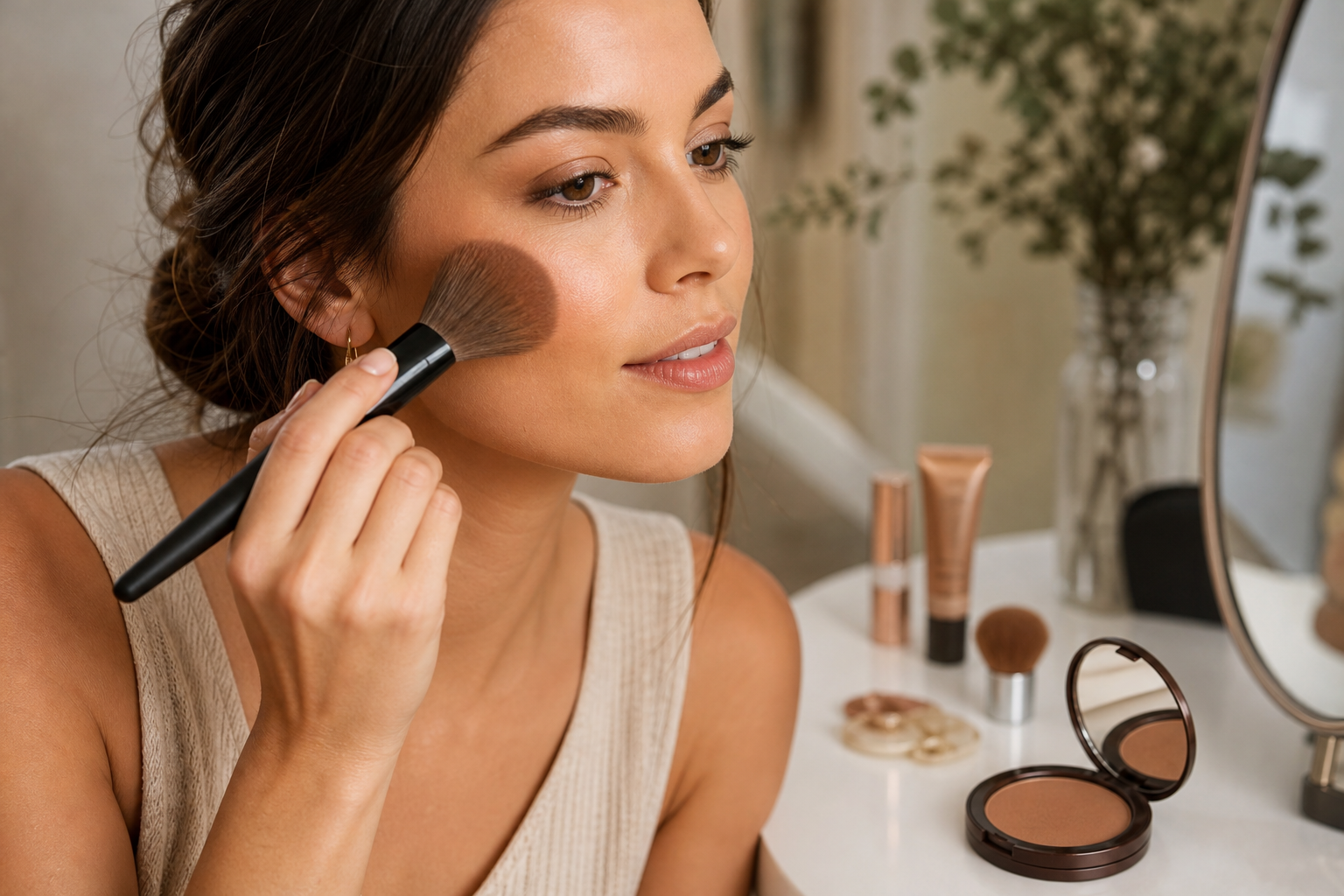
“Mineral finish bronzer” is not a standardized cosmetic category. In practice, the phrase may describe a mineral or talc-free formulation, the look created by the powder, or both. The most useful way to shop is to separate formulation claims from qualities you can see and feel, including tone, texture, finish, and ease of application.
The wording usually combines two different ideas. “Mineral” may refer to how a product is formulated or marketed, while “finish” describes the appearance left on the skin, such as matte, silky, radiant, or shine-reducing. A product can have a soft, natural-looking finish without the listing proving that it contains specific mineral ingredients.
That distinction matters because “mineral finish bronzer” does not identify one regulated product type. Before buying, look for clear information about the actual formula and the appearance you want. If you are considering a mineral finish bronzer with balanced red and brown tones, read the product details to understand its texture, claims, net weight, and directions rather than assuming the name answers every formulation question.

A bronzer decision becomes easier when you compare the features separately. The following guide translates marketing language into practical questions.
| What to compare | What it affects | What to check |
|---|---|---|
| Tone | Whether the colour adds warmth, definition, or too much orange | Look for a shade description and consider your undertone and existing makeup |
| Texture | How easily the powder picks up, spreads, and blends | Words such as silky or finely milled can describe feel, but test gradually when possible |
| Finish | Whether the result looks matte, natural, luminous, or more reflective | Do not confuse finish with ingredient quality or wear time |
| Formulation claims | Ethical or ingredient preferences | Read the full ingredient list and confirm claims such as vegan or talc-free |
| Shade fit | How natural the bronzer looks on your complexion | Check available shades and do not assume one shade suits every skin tone |
A good listing should also explain how much product you receive and how it is intended to be used. These details help you compare products more fairly than a broad phrase such as “natural” or “mineral finish.”
Bronzer is generally used to add warmth and subtle structure, not to replace foundation or create a sharp contour. Brown tones can contribute depth, while red tones can add warmth. The balance between them affects whether the colour looks softly sun-warmed or noticeably reddish.
Oria Botanica describes its bronzer as having a balance of red and brown tones for a natural tan and sculpted look. That description gives shoppers a useful starting point, but it does not guarantee a perfect match for every undertone. If your complexion is very fair, deep, cool, warm, or olive, apply a small amount first and assess the colour in natural light.
Texture describes the way the powder behaves during application. A silky texture may feel smooth and make blending more comfortable, but the result still depends on the brush, the amount applied, your base makeup, and how well the edges are blended.
A shine-reducing or matte-leaning finish can appeal to shoppers who prefer less visible sheen, while a radiant finish may suit someone who wants more light on the cheeks. Neither description proves that a product will control oil, last for a particular number of hours, or improve the skin. Those are separate claims that should be supported by specific product information.
“Vegan” and “talc-free” are different claims. Vegan generally addresses whether animal-derived ingredients were used, while talc-free indicates that talc is not included in the formula. Neither statement confirms that a product contains minerals, is safer for every person, or will never cause sensitivity.
For a more complete assessment, review the ingredient list and directions instead of treating one label claim as a shortcut. Canadian cosmetic ingredient lists use the International Nomenclature of Cosmetic Ingredients, or INCI, system, which makes it easier to compare the names used across products.
A powder bronzer may suit someone who wants a compact cheek product, a natural tan effect, or a finish that reduces visible shine. It can also be convenient for shoppers who prefer vegan or talc-free product claims and want to build colour in small layers.
It may be less appealing if you strongly prefer a cream or liquid texture, a visibly luminous finish, or a shade that is not available in the product range. “Compatible with all skin types” can describe a product’s intended use, but it does not remove the need to check ingredients or find the right shade for your complexion.
Powder bronzer is easiest to control when you start with less than you think you need. Use this sequence for an even, natural-looking application:
The main goal is a gradual transition. If too much powder lands in one area, use a clean brush to soften the edges before adding more product elsewhere.
Bronzer adds warmth and structure, while blush adds a more obvious flush of colour. Applying bronzer first gives you a warm base for placing blush on the cheeks, although the exact order can vary with the formulas you use.
For a controlled result, start with a small amount of bronzer, then add a buildable blush formula gradually. Oria Botanica describes its blush palette as finely milled and blendable, with shades that can be worn alone or layered. Use one shade for a subtle look, or combine tones carefully for a more dimensional radiant finish. Keep blending the boundary between the two products so neither colour looks isolated.
Before purchasing or using a bronzer in Canada, check the label rather than relying only on the product name or a short online description. Health Canada explains that cosmetic labels should provide information that helps consumers identify ingredients, use products safely, and contact the manufacturer. See the Canadian cosmetic labelling requirements for the core information to look for.
Health Canada also notes that cosmetic ingredient lists use INCI names and that cosmetic labels include information such as quantity, directions, warnings, and contact details. You can review the agency’s guidance on how cosmetic labels help consumers make informed choices before ordering.
Oria Botanica’s bronzer listing illustrates the level of detail shoppers can use when comparing products. It describes balanced red and brown tones, a silky texture, a shine-reducing effect, vegan and talc-free claims, compatibility with all skin types, and a net weight of 0.44 oz or 12.5 g. Its directions recommend using a bronzing brush, tapping off excess powder, sweeping colour across the cheeks and forehead, and blending along the jawline.
These details help explain the intended colour, feel, finish, and application method. They do not establish that the product contains specific minerals, and the talc-free claim should not be interpreted as proof that it is safer or better for every shopper. The ingredient list remains the appropriate place to investigate the formula.
Not necessarily. “Mineral bronzer” may suggest a formulation or marketing approach, while “mineral finish bronzer” may describe the look of the finished makeup. Because the phrase is not a standardized category, check the ingredient list and finish description separately.
No. Talc-free only indicates that talc is not included in the formula. It does not identify the replacement ingredients or prove that the product contains mineral pigments.
A product may be described as compatible with all skin types, but individual preferences, sensitivities, base makeup, and shade matching still differ. Review the ingredients and begin with a small amount to assess the finish you get.
Start lightly across the cheeks and forehead, then blend along the jawline if you want more definition. Tap off excess product and use small circular motions to avoid concentrated edges.
For powder products, applying bronzer first and blush second is a straightforward way to add warmth before colour. Build both gradually and blend where they meet. Cream and liquid products may require a different order.
Check the product identity, INCI ingredient list, net quantity, directions, warnings or cautions, and contact information. These details help you compare products and use them as intended.
“Mineral finish bronzer” is best treated as a shopping description rather than a formal product classification. Compare the tone, texture, finish, shade options, ethical claims, and full ingredient list, and do not assume that mineral or talc-free wording answers every safety or performance question.
For application, use a bronzing brush, tap off excess, and build colour across the cheeks, forehead, and jawline in light layers. A gradual approach gives you more control, while a buildable blush can add colour and dimension without overwhelming the base.
For shoppers comparing botanical skincare, cosmetics, and beauty tools online, Oria Botanica offers a broader collection that includes makeup and skincare products to support a complete routine.