

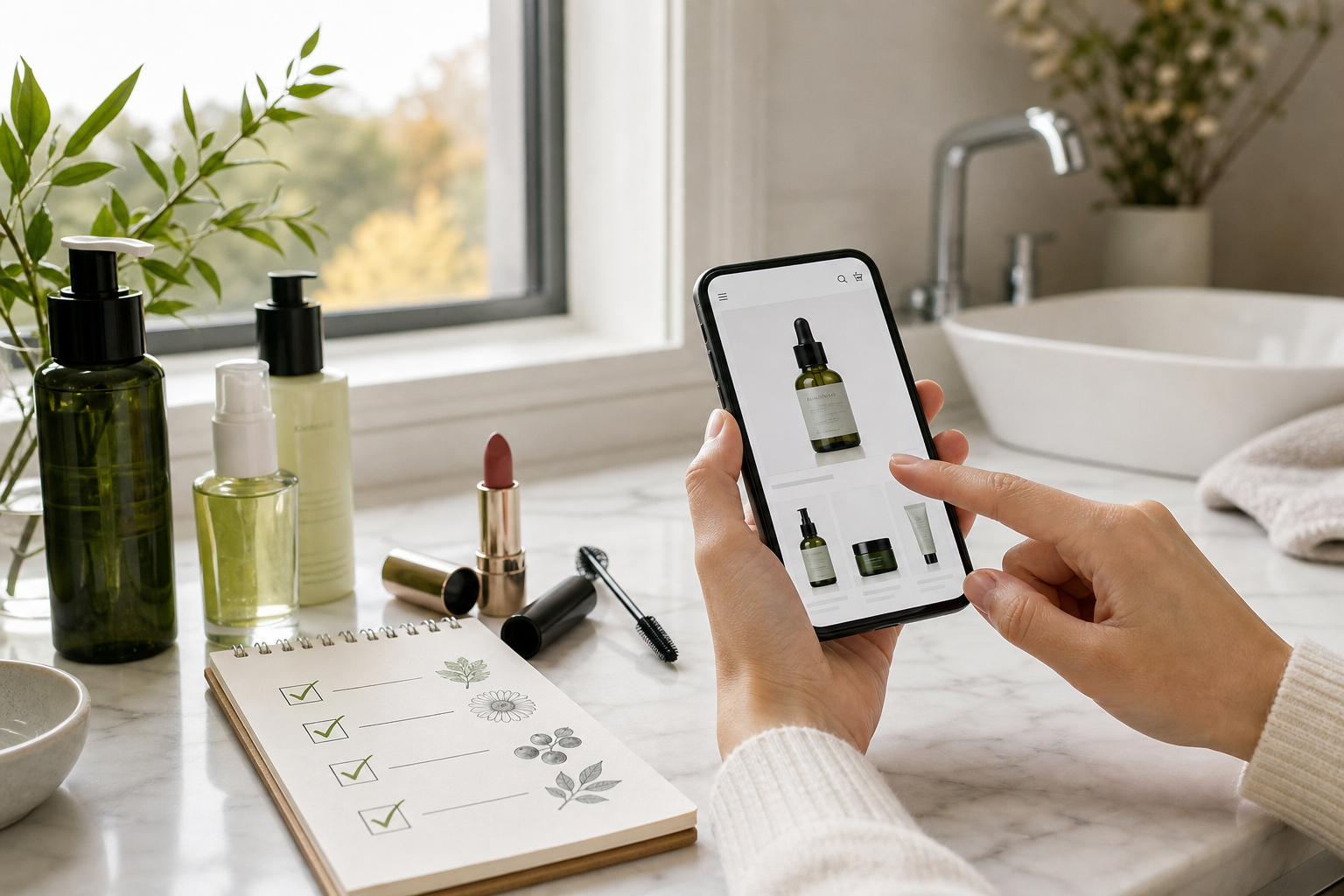
If you are searching for an FDA-approved cosmetics online store, the first thing to know is that ordinary cosmetic products are generally not approved by the U.S. FDA before sale. For Canadian shoppers, the more useful questions concern Canadian requirements, ingredients, labelling, product claims, and seller transparency.
This does not mean cosmetics are unregulated. It means that “FDA-approved” is usually the wrong standard for judging an everyday cleanser, blush, lipstick, mascara, or moisturizer. The checklist below can help you assess any online cosmetics store, including one serving shoppers in Edmonton and across Canada.
The U.S. FDA does not generally approve cosmetic products or their ingredients before they reach the market, although certain colour additives receive specific regulatory treatment. The FDA does regulate cosmetics and requires them not to be adulterated or misbranded. Its explanation of cosmetic approval is useful when an online listing uses approval language loosely.
For Canadian shoppers, an “FDA-approved” badge should not be the main purchasing signal for an ordinary cosmetic. Instead, ask whether the seller identifies the product accurately, provides information needed for safe use, and avoids presenting a cosmetic as a treatment for a medical condition.
Manufacturers and distributors remain responsible for the safety of marketed cosmetics. The absence of routine pre-market approval is therefore not a reason to ignore product information. It is a reason to examine the information available and question unsupported assurances.

Cosmetics sold in Canada must be safe to use and meet the requirements of the Food and Drugs Act and Cosmetic Regulations. These requirements cover product safety, ingredients, labelling, manufacturing, handling, and advertising. Health Canada’s cosmetics regulatory information explains that products must not pose a health risk when used as intended.
These rules also matter when you order online. A seller located outside Canada is not automatically exempt from Canadian requirements when selling to Canadian consumers. Product pages, checkout information, packaging, and seller details should make it possible to understand what you are buying and who is responsible for the sale.
Look for a clear product identity, intended cosmetic use, ingredient information, directions, relevant warnings, and the seller’s name and contact details. For products with shades, sizes, or other variations, confirm that the description applies to the specific version you are adding to your cart.
| Concept | What it means | What shoppers should conclude |
|---|---|---|
| FDA pre-market approval | Ordinary cosmetic products are generally not approved by the U.S. FDA before sale. | Do not treat “FDA-approved cosmetics” as a normal or necessary approval mark. |
| FDA regulation | Cosmetics must meet applicable safety and labelling requirements, while certain colour additives are regulated separately. | Regulated does not mean individually approved. |
| Canadian cosmetic requirements | Cosmetics sold in Canada must comply with the Food and Drugs Act and Cosmetic Regulations and be safe to use. | Look for accurate product information and responsible claims. |
| Cosmetic Notification Form | Manufacturers and importers notify Health Canada about cosmetic products sold in Canada. | Notification is not approval, certification, endorsement, or proof of effectiveness. |
| Therapeutic authorization | Products making certain therapeutic claims may fall outside the ordinary cosmetic category. | Be cautious when a cosmetic claims to treat or prevent a disease or condition. |
Health Canada states that submitting a Cosmetic Notification Form does not constitute approval for sale or confirmation that a product complies with every legislative requirement. Treat notification as part of the regulatory process, not as a consumer-facing quality certificate.
A cosmetic claim generally describes an appearance, sensory, or cleansing purpose. Examples include moisturizing the skin, adding colour, cleansing the face, conditioning lashes, or creating a smoother-looking finish.
A therapeutic claim suggests that a product treats or prevents a disease, disorder, or health condition. Health Canada explains that these claims are not permitted for an ordinary cosmetic without the appropriate regulatory authorization. Claims such as “treats eczema,” “prevents infection,” or “cures acne” should prompt you to check the product’s regulatory category.
Also question approval language. “FDA-approved,” “clinically proven,” “non-toxic,” and “safe for everyone” can mean different things depending on the evidence behind them. A clear online store should describe intended use without implying medical approval or guaranteed results.
Clean beauty, botanical skincare, natural makeup, and cruelty-free cosmetics are shopping preferences or brand-positioning terms. They can help narrow a collection, but they are not interchangeable with Canadian regulatory compliance. You should still review ingredients, directions, claims, and seller information.
Oria Botanica presents itself as an online clean beauty brand offering botanical skincare, cosmetics, makeup, and beauty tools. Its website describes its branded products as cruelty-free and made with safe, skin-friendly ingredients. These statements explain the brand’s positioning, but product-specific information remains important.
For more context on evaluating ethical and clean beauty language in Canada, read about clean beauty and cruelty-free cosmetics in Canada. Brand values are useful decision factors, but they do not turn an ordinary cosmetic into an FDA-approved product.
Oria Botanica’s collection includes skincare, makeup, and tools for different parts of a beauty routine. Examples identified on the site include a Kale Face Cleanser, blush palette, finishing powder, setting spray, vegan lip balm, and other skincare and makeup products. Assess each product page individually rather than assuming one general brand statement answers every question.
For colour cosmetics, the 3-shade blush palette is described as buildable, suitable for different skin tones and undertones, and made in North America. That provides useful information about shade format and manufacturing context. You should still review current product details, ingredients, directions, and variation before ordering.
For complexion finishing, an ultra-fine finishing powder is described as suitable for setting makeup, with different application methods for a natural or more airbrushed finish. A lightweight setting spray is described as refreshing the skin and helping makeup stay in place. These are cosmetic-use descriptions, not promises to treat a condition or evidence of FDA approval.
The site also lists a vegan lip balm described as unscented and made with plant-based oils. “Vegan” describes formulation positioning, while “cruelty-free” describes animal-testing policy. Neither term confirms that a product suits every individual, so ingredient and use information remain important.
First, decide what cosmetic result you want, such as cleansing, moisturizing, adding colour, setting makeup, or conditioning the lips. Then open the specific product page and check ingredients, directions, warnings, variations, seller information, shipping terms, and the return policy.
Next, examine the claims. If the wording shifts from improving appearance or cleansing to treating or preventing a condition, ask whether the product has the authorization required for that type of claim. If the listing relies heavily on “FDA-approved” language, remember that ordinary cosmetics are generally not approved by the FDA before sale.
Finally, pause if a material detail is missing. A reputable store should be able to clarify intended use, ingredients, product variation, or delivery terms before you purchase.
Generally, no. The U.S. FDA does not usually approve ordinary cosmetic products before marketing, although it regulates cosmetics and handles certain colour additives differently.
Check the seller’s identity, intended cosmetic use, ingredients, directions, warnings, variations, shipping terms, return policy, and the accuracy of product claims.
No. Health Canada states that a Cosmetic Notification Form does not constitute approval for sale, confirmation that a product is a cosmetic, or proof that it complies with all legislative requirements.
A claim is more likely to be therapeutic when it says that a product treats or prevents a disease, disorder, infection, or health condition. Claims about cleansing, moisturizing, colour, fragrance, or appearance are generally cosmetic.
No. These terms describe formulation preferences, ingredient positioning, or animal-testing policy. They do not replace checking Canadian requirements and product information.
The best alternative to searching for FDA-approved ordinary cosmetics is to look for a store that provides clear product information and makes claims matching the product’s cosmetic purpose. For Canadian shoppers, that means considering Canadian requirements, ingredient and label information, appropriate claims, seller transparency, and practical shipping and return terms.
Oria Botanica offers an online collection of botanical skincare, cosmetics, makeup, and beauty tools, with a stated cruelty-free and skin-friendly brand positioning. To compare available products and review details relevant to your routine, browse Oria Botanica online before deciding what to buy.