

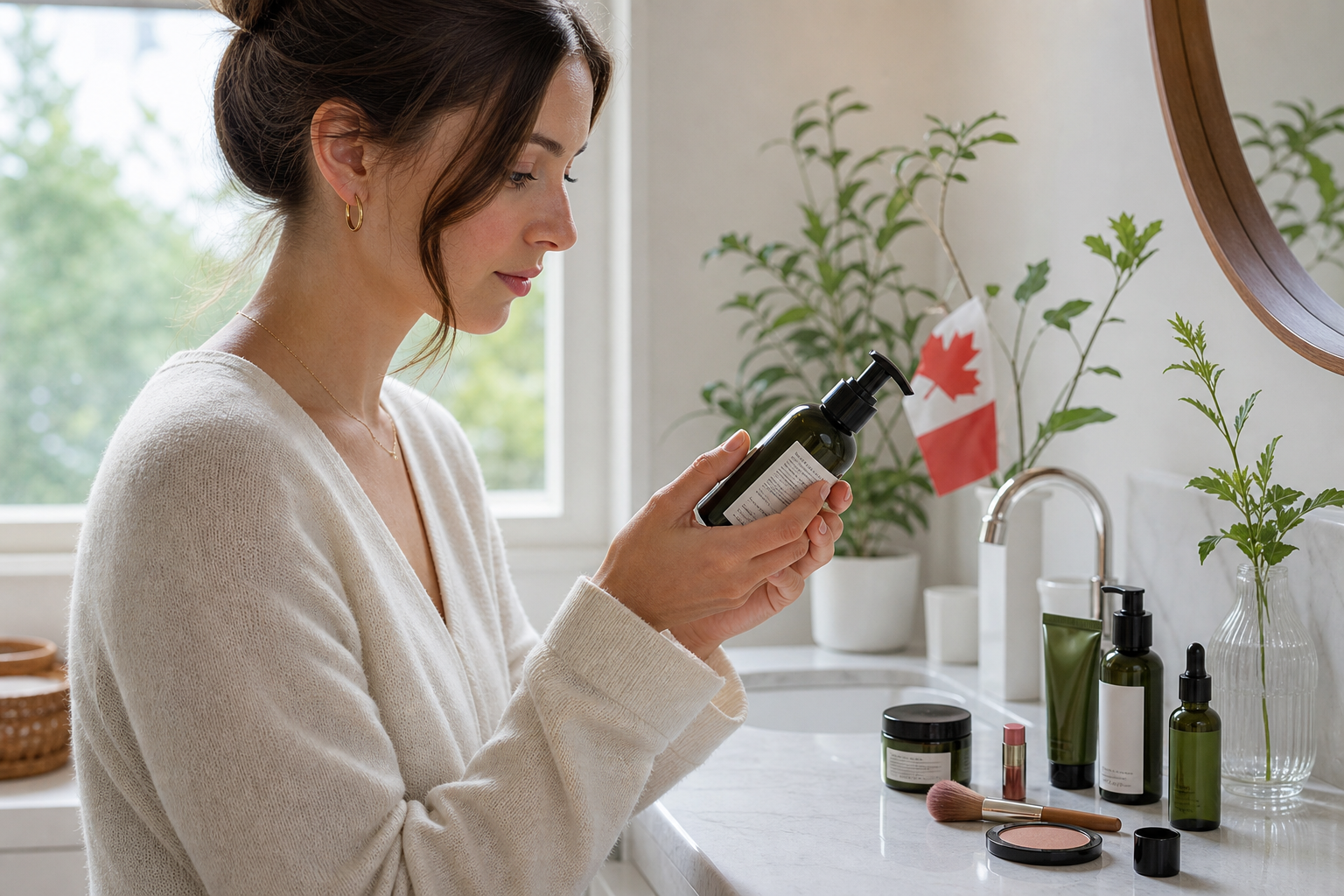
Choose cruelty-free cosmetics by checking what the claim covers, how the brand supports it, and whether it is being confused with vegan, clean, natural, or organic beauty. A bunny symbol or short label statement may not explain whether the policy includes finished products, ingredients, suppliers, or testing required in other markets.
For Canadian shoppers, the most reliable approach is to read the brand’s animal-testing policy, consider the country’s regulatory context, use a credible third-party directory as a cross-check, and then select products that suit your routine. The process below uses Oria Botanica as a relevant example of a brand that states its line is cruelty-free, without treating that statement as third-party certification.
“Cruelty-free” generally communicates a position about animal testing, but the exact scope can vary between brands. A company may be referring only to its finished products, while another may describe a broader policy involving ingredients, suppliers, and manufacturing partners.
Before buying, look for answers to these questions:
The wording matters because “cruelty-free” and “not tested on animals” do not have unrestricted legal definitions for cosmetic labelling in the United States. The FDA’s explanation of cruelty-free claims notes that some companies use these claims only for finished cosmetic products.
Stop point: If you cannot tell what a claim covers, do not assume it extends to the whole supply chain. Continue to the brand’s detailed policy or ask the company for clarification.

Inspect the brand’s website and product information. A useful policy should identify the products or lines covered and explain the company’s position in language more specific than an unexplained animal image.
Oria Botanica states that its branded line is cruelty-free and never tested on animals. It also describes its collection as clean beauty with botanical skincare, cosmetics, and beauty tools. This is the company’s stated position, not proof of certification by PETA, Leaping Bunny, or another external programme.
Stop point: Pause when a policy uses broad ethical language but does not explain the testing scope.
Canada banned the sale of cosmetics as of December 22, 2023, following legislation addressing cosmetic animal testing. The Health Canada overview explains the change.
Canadian companies that use animal-testing claims must retain proof supporting those claims. Health Canada may request that proof if it suspects a claim is false. This applies to claims made through words such as “cruelty-free” and through images or symbols, as explained in Health Canada’s cosmetic advertising and labelling guidance.
The Canadian rules provide useful consumer protection, while a brand’s policy still helps you understand what its claim means. The ban should not be treated as proof that every product has the same animal-testing policy across every ingredient supplier or international market.
PETA provides a searchable list of companies and products identified as cruelty-free under its programme criteria. Use the Canada region directory or the broader PETA cruelty-free database to check the brand name, listing scope, programme criteria, and currency.
Absence from a directory is not automatic proof that a company tests on animals. A brand may not participate or may not meet that programme’s listing process. Do not describe a brand as third-party certified unless you can verify that certification and its scope.
| Claim | What it usually signals | What it does not prove by itself |
|---|---|---|
| Cruelty-free | A position that the product or brand does not use animal testing within the stated scope. | That the product is vegan, organic, natural, clean, or free from animal-derived ingredients. |
| Vegan | That the product is made without animal-derived ingredients, according to the brand’s definition. | That it was not tested on animals. |
| Clean beauty | A brand’s approach to ingredient selection or excluded ingredients. | A universal legal definition or cruelty-free status. |
| Natural | That the brand emphasizes naturally derived ingredients or materials. | That the product is organic, vegan, or cruelty-free. |
| Organic | That ingredients or products may follow a stated organic standard. | That the product is cruelty-free, vegan, or suitable for every user. |
If avoiding animal-derived ingredients matters to you, check the specific product information for vegan status rather than inferring it from a cruelty-free claim.
After checking the ethical claim, decide what you actually need. Cruelty-free status is one part of a buying decision, not a substitute for reviewing product information, intended use, ingredients, or your own skin and makeup preferences.
These are catalogue examples, not guarantees about performance, ingredients, or suitability. Review each product’s current information and consider professional advice for persistent skin concerns or known sensitivities.
Oria Botanica is an Edmonton-based online clean beauty brand serving customers nationally in Canada. The company states that its branded line is cruelty-free and never tested on animals, and that its entire line is crafted in North America. Its online collection brings together botanical skincare, makeup, and beauty tools.
This positioning may matter to ingredient-conscious shoppers seeking a stated cruelty-free commitment, North American production, botanical-focused products, and a complete routine. It does not remove the need to check product details or distinguish the brand’s claims from independent certification.
Contact the brand with one focused question: “Does your cruelty-free policy cover finished products, ingredients, suppliers, and testing required by regulators in any market where you sell?” Canadian businesses making animal-testing claims are expected to retain supporting proof, so asking for clarification is a reasonable part of informed shopping.
Choosing cruelty-free cosmetics in Canada starts with defining the claim, checking its scope, and reading the brand’s supporting policy. Next, use Canada’s regulatory context and a credible third-party directory as cross-checks. Finally, separate cruelty-free from vegan, clean, natural, and organic claims before selecting products that fit your routine.
If those checks align with your priorities, explore Oria Botanica’s online collection of stated cruelty-free botanical skincare, cosmetics, and beauty tools. The brand serves customers nationally and offers free shipping on orders over $100.