

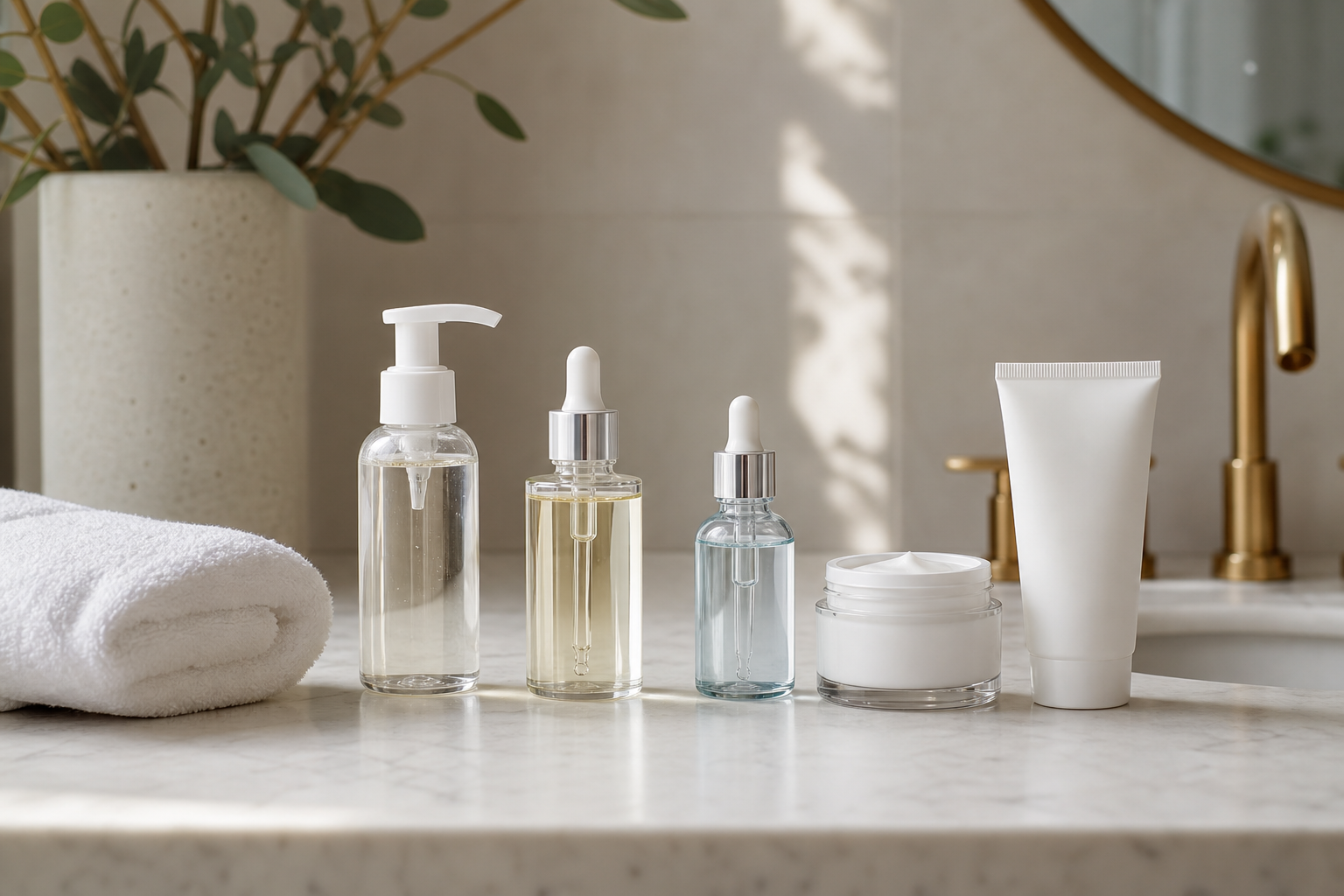
Glycolic acid serum layering means applying an exfoliating serum after cleansing and before hydrating or moisturizing products. A simple routine generally moves from cleanser to glycolic acid serum, hydrating serum, moisturizer, and sunscreen during the day. Product directions and your skin’s response should always guide the final routine.

Layering means applying skincare products in a deliberate order. In this routine, glycolic acid serum is the exfoliating step, so it is generally applied to cleansed skin before products designed primarily to add moisture.
Oria Botanica describes its glycolic acid serum as an exfoliant intended to improve complexion, smooth skin tone, and refine skin texture. Its listed ingredients include glycerin, aloe vera, sodium hyaluronate, vitamin E, squalane, and salicylic acid. Reading the full formula therefore matters when deciding what else to use.
Application order is useful, but it does not make every combination suitable for everyone. A routine can still feel irritating if it includes too many exfoliating or active products at once.

The following order is a general framework for combining exfoliation with hydration. Use the product label as your primary instruction, especially if it gives different directions.
| Step | Product type | Purpose |
|---|---|---|
| 1 | Cleanser | Remove surface residue before applying leave-on products. |
| 2 | Glycolic acid serum | Apply the exfoliating serum as directed. |
| 3 | Hydrating serum | Add moisture with ingredients such as hyaluronic acid or glycerin. |
| 4 | Moisturizer | Finish with a moisturizing step if needed. |
| 5 | Sunscreen during the day | Help protect skin from sun exposure while using an AHA. |
This order does not guarantee a particular result or determine how often glycolic acid should be used. Those decisions depend on the product directions, the full formula, and your skin’s tolerance.
Hydration is usually the more straightforward pairing. After glycolic acid serum, consider a hydrating product containing hyaluronic acid or glycerin, followed by moisturizer if your skin needs additional comfort.
Oria Botanica’s hyaluronic acid serum is described as a hydrating product containing hyaluronic acid and glycerin. This hydration-focused follow-up is different from adding another exfoliating treatment.
Keep the routine simple when introducing a new serum. Adding one new step at a time makes it easier to notice whether your skin feels comfortable and whether the product fits your existing routine.
Layering glycolic acid with a hydrating serum is not the same as stacking multiple active treatments. A second exfoliating acid, retinol product, acne treatment, or other strong active may create additional irritation concerns. Products being applied in a particular order does not prove that they are compatible together.
If your goal is to add exfoliation while maintaining comfort, start with basic hydration and moisturizer rather than automatically adding more actives. If you already use treatment products, check their directions and ask a pharmacist, physician, or qualified skincare professional about combining them.
Do not evaluate a glycolic acid serum by its front-label name alone. Oria Botanica’s product information lists both glycolic acid and salicylic acid, alongside glycerin, aloe vera, sodium hyaluronate, vitamin E, and squalane.
This does not mean the formula will suit every routine in the same way. It means you should consider all listed exfoliating ingredients before adding another acid or treatment product. Check the current label for directions, warnings, and any ingredient-list changes before use.
Health Canada’s cosmetic ingredient guidance is relevant when deciding how long and how frequently an AHA product remains on the skin.
Morning use depends on the product directions and your tolerance. If the label allows daytime application, sunscreen is especially important because Health Canada identifies increased sun sensitivity as a possible concern with AHAs.
A cautious daytime order is cleanser, glycolic acid serum if directed, hydrating serum, moisturizer, and sunscreen. If you cannot follow the directions or protect your skin from sun exposure, ask a qualified professional for advice.
If your skin begins to sting, burn, become unusually red, or feel persistently uncomfortable, stop adding products and simplify the routine. Avoid introducing more exfoliants or active treatments while you determine what caused the reaction.
Follow the product’s safety instructions and seek professional advice for persistent or severe symptoms. Applying several new products to counteract irritation can make the cause harder to identify.
Oria Botanica’s product information identifies its Glycolic Acid Serum as vegan, cruelty-free, paraben-free, and 30 mL in size. These details may help with product selection, but they do not replace reading the current label or assessing how the formula fits your routine.
In a typical layering order, glycolic acid serum goes before hyaluronic acid serum. Apply the exfoliating step after cleansing, then use the hydrating serum and moisturizer. Follow the specific product directions if they state a different order.
Yes, moisturizer can generally follow glycolic acid serum. If you also use a hydrating serum, apply it between the glycolic acid and moisturizer. A moisturizing step may make the finish feel more comfortable, but it does not replace the product directions.
It depends on the product directions and your tolerance. If used in the morning, apply sunscreen as the final daytime skincare step. Health Canada advises limiting sun exposure when using AHAs because they may increase sensitivity.
Stop adding active products and simplify your routine. Follow the product’s safety instructions, and seek professional advice if the reaction is severe, persistent, or concerning.
Yes. The listed ingredients include salicylic acid as well as glycolic acid. Review the complete current ingredient list before combining the serum with other exfoliating products.
Glycolic acid serum layering is straightforward in principle: cleanse first, apply the glycolic acid product as directed, follow with hydration, use moisturizer as needed, and apply sunscreen during the day. The more important decision is whether the rest of the routine supports comfort rather than adding several active ingredients at once.
Check the full formula, patch test, monitor your skin, and treat sun protection as part of the routine. To review the ingredients and product details discussed here, visit Oria Botanica.