

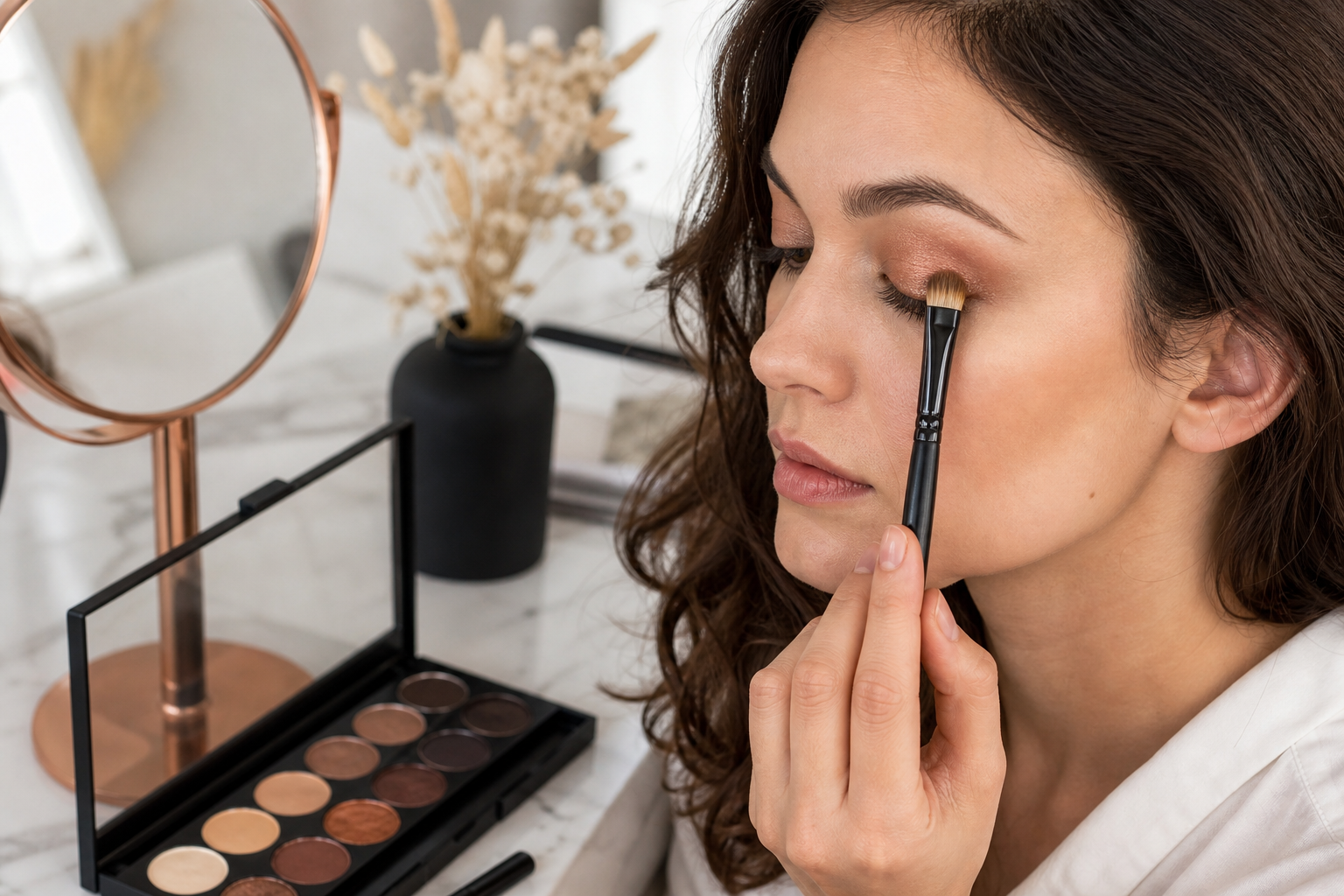
A packing eye brush is mainly used to press or pat powder eyeshadow onto the eyelid, not to diffuse colour through the crease. Its flat shape and dense bristles help place colour deliberately, while a softer blending brush is better for softening the edges.
The technique is straightforward: prepare the lid, pick up a modest amount of powder, tap away excess, press the colour into place, and build gradually. Thin layers are usually easier to control than one heavily loaded application.

“Packing” means placing eyeshadow in a concentrated area by pressing or patting it onto the skin. You can use the same brush to build intensity, add a second shade, or place shimmer on the centre of the lid. The key motion is controlled contact rather than broad back-and-forth sweeping.
A blending brush is generally used to move colour through the crease or blur a visible border. Oria Botanica describes its Packing Eye Brush as having a flat head and firmly packed bristles to pick up and deposit powder, with soft synthetic bristles for applying colour to the eyelid.
That shape can make placement easier, but it does not mean you need a large amount of product. A dense brush can pick up plenty of powder, so a light load and gradual building are useful starting points.

Begin with a clean, dry eyelid and keep the first layer of skincare light. If the lid feels oily or has excess product on it, eyeshadow may move differently from one area to another. Give any skincare or base product a moment to settle before applying powder.
An optional eyelid primer can create a smoother base for colour. Oria Botanica describes its Eye And Lip Primer as a sheer, smooth formula intended to help eyeshadow last and reduce creasing. Apply a small amount, spread it evenly, and follow the product directions before adding powder.
Primer is not essential for every look. If your eyelids are comfortable and your eyeshadow applies evenly, you may prefer to work directly on the skin or over a suitable base. Test new products carefully, especially around the eyes.
Pick up powder with the broad, flat surface of the brush rather than only the edge. Touch the bristles to the shadow with controlled pressure, avoiding repeated grinding into the pan.
For a simple eye look, begin with a mid-tone shade or the colour you want most visible on the lid. For a layered look, use a lighter shade first and reserve deeper colour for the outer corner or lash line. Starting with less product gives you more room to adjust.
Hold the brush over the pan or a clean surface and tap the handle gently, or lightly knock the brush against your finger. This removes loose powder before application. It cannot guarantee that fallout will not occur, but it may give you more control over how much reaches the lid.
Be especially measured with very soft, sparkly, or loose powders. If fallout is a concern, you can also apply eye makeup before foundation.
Place the brush near the lash line or wherever you want the colour to begin. Keep the flat face of the brush in contact with the lid and use short pressing or patting motions. Work across the lid in small sections instead of dragging the brush from corner to corner.
For concentrated colour, use the flat face to press product into place. For a softer deposit, use less pressure and fewer passes. Keep the first layer within the intended shape, because extending colour is easier than removing an oversize patch.
Pause after the first pass and check both eyes. If you want more depth, repeat the same pressing motion with another small amount of product. Building gradually lets you compare placement and adjust before the colour becomes difficult to move.
When adding a deeper shade, concentrate it where you want definition, such as the outer third of the lid or close to the lash line. Use a clean brush, or a clean section of the brush, when changing shades to avoid muddying the colours.
Once the lid shade is in place, switch to a clean, softer blending brush. Use small, light movements around the outer edge and crease area, keeping the brush away from the centre unless you intentionally want to diffuse that colour.
Blend the border in stages rather than repeatedly sweeping over the entire lid. If the edge becomes too faint, return to the packing brush, add a small amount of colour, and press it back into the intended area.
| Tool | Typical shape | Main motion | Best suited to |
|---|---|---|---|
| Packing eye brush | Flat head with firmly packed bristles | Pressing and patting | Placing and building powder eyeshadow on the lid |
| Blending brush | Soft, flexible, rounded or tapered bristles | Light sweeping or small circular movements | Softening edges and diffusing crease colour |
| Eyeliner tool | Fine brush or pointed applicator | Controlled lining | Defining the lash line or creating a wing |
After applying eyeshadow, you can define the lash line with a dual tip eye definer pen. Oria Botanica describes its fine brush end as suitable for precise lines and its larger felt tip end as suited to bolder lines.
Avoid sharing eye brushes, particularly when they are used close to the lash line. Clean the brush according to the manufacturer’s care guidance and allow it to dry fully before storing it.
Inspect the bristles and handle regularly. Stop using the brush if the fibres become damaged, rough, or loose in a way that makes application uncomfortable. Oria Botanica describes this brush as having synthetic and vegan bristles, but that description does not replace individual sensitivity or product-safety considerations.
A packing eye brush may suit someone who wants deliberate lid colour, controlled powder placement, or the ability to build a look in stages. It is also useful when you want one brush dedicated to depositing colour while another handles blending.
Oria Botanica’s Packing Eye Brush is described as having a flat head, firmly packed fibres, and soft synthetic, vegan bristles. Those specifications align with the basic needs of a brush used to pick up and press powder eyeshadow. If your routine is mostly diffused crease work, you will likely still want a separate blending brush.
Yes. A packing brush can place either powder type on the lid. Use a lighter load and shorter pressing motions for a subtle result, then build gradually if you want more visible colour.
Not necessarily. Start with a dry brush and follow the eyeshadow manufacturer’s instructions. Wetting a brush can change how a powder applies and may affect the product.
Patting uses repeated contacts to place powder in a defined area. Sweeping moves colour across the skin and is more useful for diffusing or blending. A packing brush is primarily designed for the first motion.
No. Primer is optional and depends on how your eyelids and eyeshadow behave. It may provide a smoother base and help manage creasing, but a clean, dry lid can also be suitable.
Clean it according to the manufacturer’s guidance and whenever product buildup affects application. Clean it sooner if it is shared, used near the lash line, or becomes visibly soiled. Let it dry fully before using it again.
The simplest way to remember packing eye brush application is to match the tool to the movement. Press or pat with a flat, dense brush when you want to place powder on the lid, switch to a softer brush when you want to soften the edges, and use an eyeliner tool for precise lash-line definition.
Oria Botanica’s Packing Eye Brush may be worth considering if you want a brush described as having soft synthetic, vegan bristles, a flat head, and firmly packed fibres for powder placement. Explore the skincare, cosmetics, and eye-makeup range at Oria Botanica.