

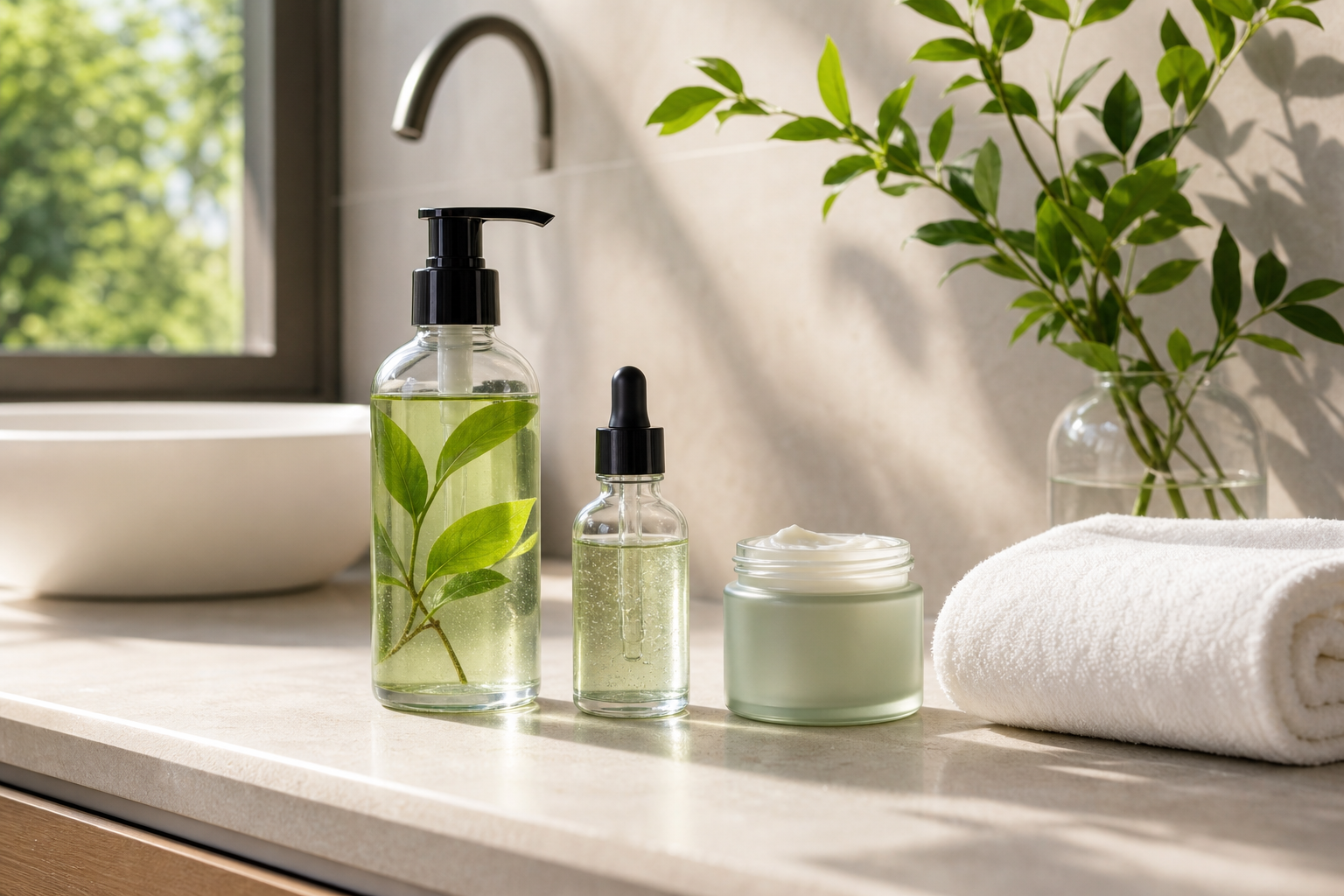
Botanical skincare generally refers to products formulated with plant-derived ingredients, botanical extracts, or other plant-focused components. The term describes a formulation approach, not an automatic guarantee that a product is organic, clinically proven, irritation-free, or suitable for every skin type.
For ingredient-conscious Canadian shoppers, the useful question is not simply whether a product says “botanical.” It is what the formula contains, what role the product serves, and which additional claims the brand can clearly support.
What is botanical skincare?
Botanical skincare is a broad category for products that feature plant-derived ingredients or botanical extracts. These may include oils, herbs, flowers, leaves, roots, or other plant-based materials. The word identifies what a formula focuses on or includes; it does not tell you how much of an ingredient is present or what result the product will deliver.
Botanical formulas may also combine plant-focused ingredients with other formulation approaches, such as minerals, peptides, or additional actives. That is why the complete ingredient information is more useful than the label alone. This example of a botanical skincare approach shows how plant ingredients can appear alongside other formulation elements.
The term may describe a product category, a brand philosophy, or both. Two products marketed as botanical can therefore differ substantially in ingredients, texture, purpose, and directions for use.
Botanical, natural, organic, clean, vegan, and cruelty-free are not the same

These terms can appear together in beauty marketing, but they answer different questions. A product may contain botanical ingredients without being certified organic. Likewise, a cruelty-free product may contain no botanical ingredients at all. Treat each claim as something to verify separately.
| Term | What it generally suggests | What to verify |
|---|---|---|
| Botanical | A plant-focused ingredient or formulation approach | Which plant ingredients are included and what role the product serves |
| Natural | A positioning based on naturally derived or nature-associated ingredients | How the brand defines “natural” and the full ingredient list |
| Organic | Ingredients or products associated with organic production standards | Whether a specific certification or standard applies, and to which ingredients |
| Clean beauty | A brand’s approach to formulation, ingredient selection, or exclusions | The brand’s definition and any ingredients it excludes |
| Vegan | A claim that the product contains no animal-derived ingredients | Whether the claim applies to the specific product and what information supports it |
| Cruelty-free | A claim concerning animal testing | Whether it applies to the brand or product and how the brand explains it |
Plant-based, natural, wildcrafted, and botanical language can also be used differently from one brand to another. For context, Wild Medicinals’ botanical skincare description demonstrates how a brand may explain its plant-focused approach. That description should not be treated as a universal definition.
How to evaluate a botanical skincare product
A botanical claim can help you find products aligned with a plant-focused preference, but it should be the start of your assessment. Use these checks before adding a product to your routine.
Start with the ingredient information
Review the complete ingredient list and identify the botanical ingredients being highlighted. A product name may suggest an ingredient or theme, but it does not establish concentration, source, processing method, allergen status, or expected effect.
Ingredient identity and product performance are also different questions. Knowing that a formula includes a plant-derived ingredient tells you something about its composition, not whether it will deliver a particular result for your skin.
Match the product role to your routine
A cleanser, serum, eye cream, facial oil, and moisturizer serve different routine roles and may have different textures and directions. Selecting a product solely because it is botanical can result in an incomplete or unnecessarily complicated routine.
Oria Botanica’s skincare range includes the Kale Face Cleanser, Glycolic Acid Serum, Active Eye Cream, Anti-aging Rose Gold Oil, and moisturizers. These represent different product categories and routine placements; their names should not be read as guarantees about a specific concern or outcome.
Consider skin compatibility and potential sensitivities
Plant-derived does not mean irritation-free. Botanical ingredients may be unsuitable for someone with sensitivities to particular plants, fragrances, essential oils, or other formulation components. Review the available product information and consider introducing an unfamiliar product thoughtfully rather than changing several products at once.
If you have a persistent skin concern or a history of significant reactions, product labels may not answer every question. Seek appropriate professional advice when needed, and do not treat botanical skincare as a substitute for medical care.
Verify ethical and manufacturing claims separately
Cruelty-free, vegan, organic, and made-in-North-America claims describe different aspects of a product or brand. Cruelty-free concerns animal testing, while vegan generally concerns animal-derived ingredients. Organic language may relate to production standards, while manufacturing information identifies where a product is made.
Oria Botanica describes its branded line as cruelty-free and says its products are not tested on animals. The brand also states that its branded collection is crafted in North America. You can review Oria Botanica’s stated brand standards, then check the product-level information for the item you are considering.
How botanical skincare can fit into an everyday routine
A plant-focused routine does not need to include every available product. Begin with the routine role you want to address, then add products when their purpose and information are clear.
- Cleanse: A product such as the Kale Face Cleanser can serve as the cleansing step.
- Use a serum: The Glycolic Acid Serum belongs to the serum category. Review its directions and product information before deciding whether it fits your routine.
- Address the eye-area step: The Active Eye Cream is an example of an eye-area product. Its name alone does not establish a particular result.
- Consider a facial oil: The Anti-aging Rose Gold Oil is listed as a facial-oil product. Assess its texture, ingredients, and place in your routine rather than choosing it solely for its botanical positioning.
- Moisturize: Select a moisturizer according to its formula information and how it works with the products you already use.
This category-based approach keeps the decision practical and helps prevent the assumption that botanical products are interchangeable.
What Canadian shoppers may want to know about Oria Botanica
Oria Botanica is an Edmonton-based online cosmetics business serving customers nationally in Canada. Its collection includes botanical skincare, makeup, and beauty tools, allowing shoppers to browse beyond individual skincare products when building a broader routine.
The brand describes its branded line as cruelty-free and crafted in North America. It also offers free shipping on orders over $100, according to the supplied business information. These details may matter to shoppers who prioritize ethical claims, North American manufacturing, and online ordering, but they do not replace assessing each product’s ingredients and purpose.
A simple decision checklist before you buy
Before ordering a botanical skincare product, ask:
- What role does it play? Confirm whether it is a cleanser, serum, eye cream, oil, moisturizer, or another product type.
- Which ingredients are identified? Look beyond the botanical wording and review the available ingredient information.
- Which claim matters to you? Verify whether the relevant claim is botanical, organic, clean, vegan, cruelty-free, or related to manufacturing.
- Could it conflict with your sensitivities? Plant-derived ingredients can still cause irritation or an allergic reaction.
- Is the information sufficient? If you cannot determine how the product is intended to be used or whether it suits your preferences, seek clearer information before purchasing.
Frequently asked questions
Does botanical skincare mean a product is organic?
No. Botanical generally indicates a plant-focused ingredient or formulation approach. It does not automatically confirm organic certification or that every ingredient was produced under organic standards.
Are botanical skincare products suitable for sensitive skin?
Not automatically. Plant-derived ingredients can still irritate some people or trigger sensitivities. Review the product information, consider known sensitivities, and introduce unfamiliar products carefully.
How can I choose a botanical skincare product for my routine?
Start with the product’s role, then review its ingredients, directions, relevant ethical or manufacturing claims, and compatibility with your preferences. Choose based on the complete information rather than the botanical label alone.
Conclusion: read the label beyond the botanical claim
Botanical skincare is best understood as a plant-focused formulation description. It can help ingredient-conscious shoppers find products aligned with their preferences, but it does not by itself establish that a product is organic, clean, vegan, cruelty-free, safer, gentler, or more effective.
For a more confident choice, match the product to its routine role, review the ingredients, consider personal sensitivities, and verify the ethical or manufacturing claims that matter to you. If that approach suits your preferences, explore Oria Botanica’s skincare collection online, with free shipping available on orders over $100.