

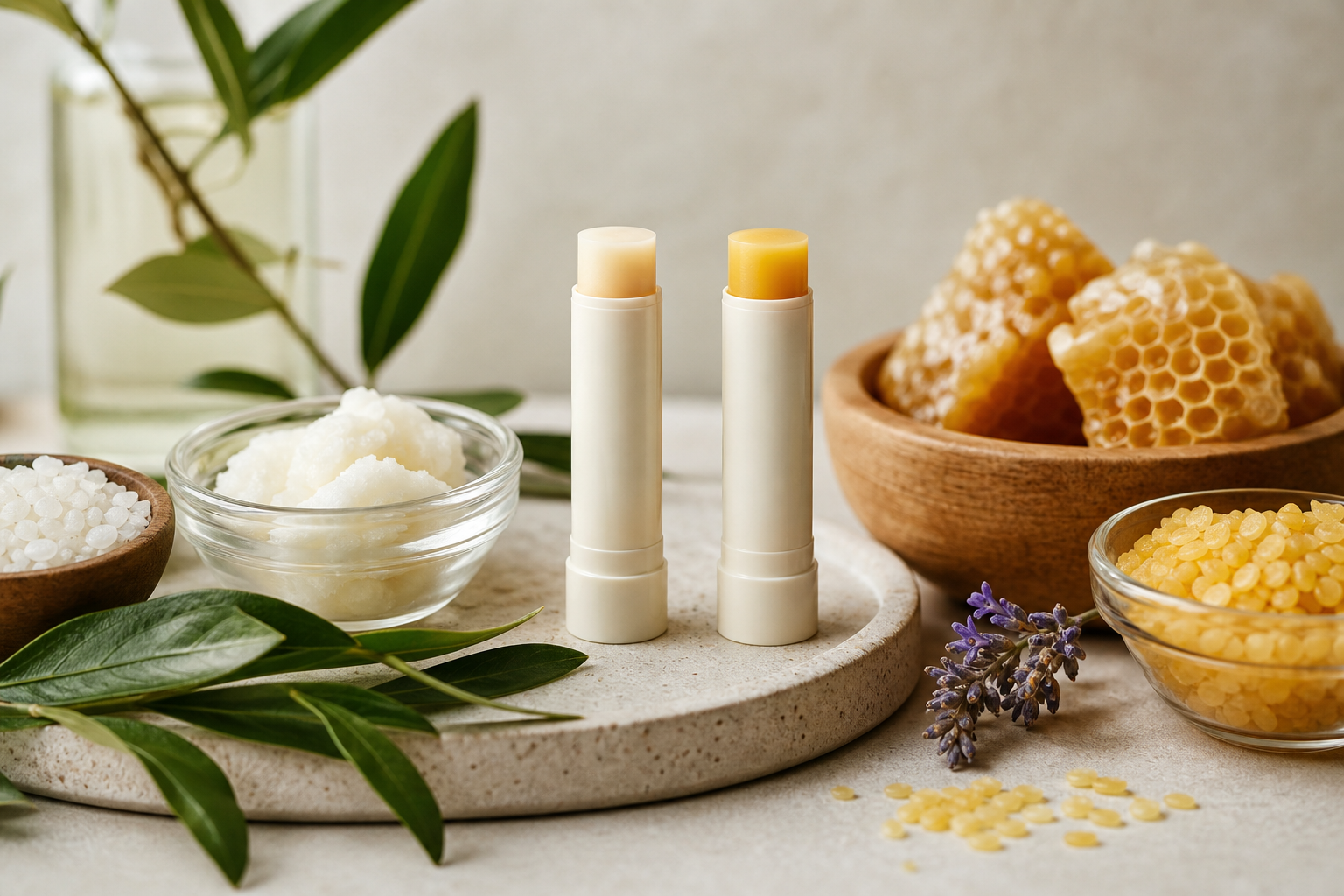
Choosing a vegan lip balm means looking past marketing and reading the ingredient panel. This article compares the plant waxes, oils and butters commonly used in vegan formulas with traditional bases such as beeswax, lanolin and petrolatum. For each ingredient family I explain function, typical INCI names, pros and cons for dry or sensitive lips, and practical buying guidance so you can pick a vegan option that works.
A vegan lip balm contains no animal-derived ingredients. That rules out obvious components such as beeswax or honey and less obvious ones such as lanolin, carmine and some glycerides that may be animal sourced. For a concise overview of the category and common exclusions, see this primer from FATCO. For formulation guidance that focuses on dry and sensitive lips, this brand guide is useful.
“Vegan” or “cruelty-free” claims on packaging are useful but not definitive. Always check the INCI ingredient list because marketing language can be inconsistent. If an ingredient name is ambiguous, contact the brand for clarification or seek third party vegan certification.
Effective lip products combine three functional groups. Understanding each group explains why ingredient choice matters for different lip conditions.
Occlusives form a film on the lip surface to slow transepidermal water loss. Petrolatum is a powerful occlusive and is widely recommended by dermatologists for severely chapped or sensitive lips because it forms a stable, nonreactive barrier; for context see reporting that compares petrolatum with other options. Vegan plant waxes and heavy butters provide occlusion too, but their effectiveness depends on the blend and the amount used.
Emollients are oils and butters that fill gaps between skin cells and make lips feel softer. Plant oils such as jojoba and esters derived from castor oil are common emollients in vegan balms and influence how quickly the product absorbs and how it feels on the lips.
Humectants like glycerin or sodium hyaluronate draw moisture into the outer layer of skin. They work best when paired with an occlusive so the attracted moisture is retained rather than lost to the air.

Plant waxes provide structure in vegan balms where beeswax would traditionally be used. They vary in hardness, melting point and occlusivity, so formulators often blend them to mimic beeswax performance.
Source and function: a thin, glossy wax from the candelilla shrub. It is harder than beeswax, so formulas use it in small amounts or blended with softer oils. Benefits include good film strength and a smooth finish. For very dry lips, candelilla contributes occlusion but can make a stick feel firmer than a beeswax formula.
Source and function: derived from palm leaves, carnauba is one of the hardest plant waxes. It raises melting point and lends a glossy, resilient finish. Carnauba is best used sparingly in blends because it increases stiffness and usually requires more emollients to keep the balm comfortable.
Source and function: soy or other hydrogenated vegetable waxes offer a softer alternative that can mimic beeswax texture more closely. They are generally economical and blendable. Performance can be slightly less occlusive than beeswax, so the oil/butter balance matters for sealing moisture.
Oils and butters supply emollience, occlusion and sensory traits. Below are common choices and their practical effects for lips.
Shea butter is rich and occlusive, with a thick feel that helps protect chapped lips. It is usually tolerated by sensitive skin, though people with tree nut sensitivities should patch test because shea is derived from a nut source.
Cocoa butter is firm and provides a protective film. It melts at body temperature and leaves a smooth finish. Some formulas combine cocoa butter with softer oils to avoid a waxy afterfeel.
Technically a liquid wax ester, jojoba absorbs well and mimics the skin’s natural lipids. It is lightweight, low risk for comedogenicity, and often safe for sensitive lips.
Coconut oil adds shine and emollience but can be comedogenic for some people and may irritate others at high concentrations. Many formulators prefer fractionated or hydrogenated derivatives that are less likely to solidify or feel greasy.
Castor oil and its esters are viscous and provide gloss and long wear. They are common in natural tinted balms. Pure castor oil can feel sticky, so esters are often used to improve texture.
Comparing these ingredient families helps shoppers decide which tradeoffs they accept.
Beeswax is a natural, mildly occlusive wax that also has emollient properties. It is soothing and pliable in a stick. Vegan plant wax blends aim to approximate beeswax feel, but occlusion and texture depend on the exact waxes and oils used.
Lanolin, derived from sheep wool, is a highly effective emollient and occlusive. It can help severely dry skin but is not vegan and can cause allergic reactions in some people. For those avoiding animal products, plant butters and wax blends are the alternative; they may require different application frequency to achieve similar protection.
Petrolatum is among the most effective occlusives and is widely recommended by dermatologists for cracked or severely chapped lips because it prevents water loss and is chemically inert for most users. If your lips are extremely irritated or you need maximum barrier protection, a petrolatum product can be the safest short term option. If you prefer vegan care, look for high-occlusion plant blends and consider using them alongside a petrolatum product at night when symptoms are worst. For more context, see this AP News summary.

Sensitivity to lip product ingredients can cause stinging, redness or worsening dryness. These items commonly trigger problems and merit caution.
Added fragrance or flavour oils are frequent causes of irritation on the thin skin of the lips. People with reactive lips should prefer fragrance-free products or those formulated specifically for sensitive skin.
Essential oils such as citrus, cinnamon or clove can be sensitizing in lip products. Even botanical extracts labelled “natural” can be allergens at higher concentrations, so review the ingredient list rather than relying on an organic or natural claim.
Some ingredient names do not reveal their origin. For example, “glycerin” can be plant or animal derived. Look for supplier notes, vegan certification, or contact the brand to confirm. The FATCO primer referenced earlier outlines common pitfalls.
Follow this short checklist when shopping online or reading a label.
Oria Botanica lists a vegan lip balm among its offerings on the brand site, and customers can confirm ingredients on the product page before buying.
Match your primary need to ingredients and claims to simplify decision making.
Priority: maximum occlusion and nonirritant formulation. Dermatologists often recommend petrolatum for severe chapping because of its unmatched occlusive strength. If you prefer vegan options, look for balms that combine high levels of occlusive plant butters with robust film formers and use them in addition to a petrolatum product when symptoms are worst, or consult a healthcare professional for persistent fissures.
Priority: fragrance-free, minimal botanical actives, and hypoallergenic emollients. Choose formulas with jojoba, shea and a gentle plant wax such as a well-blended soy wax. Avoid essential oil fragrances and lanolin.
Priority: comfort, nonsticky finish and moderate protection. Look for jojoba, lightweight esters and a mild plant wax. These products are convenient for daytime use and layering under lipstick.
Key takeaway: vegan formulations can perform well, but check the ingredient balance and avoid assuming vegan equals gentler by default.
Common vegan lip balm ingredients include plant waxes such as candelilla and carnauba, butters like shea or cocoa, oils such as jojoba and castor, and humectants such as glycerin. See the FATCO primer for a straightforward category overview.
Vegan balms can help chapped lips, but petrolatum and lanolin are particularly effective occlusives. Dermatologists often recommend petrolatum for very cracked lips because it forms a strong barrier. If you need maximum barrier protection, consider petrolatum or consult a clinician; if you prefer vegan products, choose a high-occlusion formula and monitor improvement.
Candelilla, carnauba and soy or hydrogenated vegetable waxes are common replacements. Candelilla and carnauba are harder and increase film strength, while soy wax provides a softer, beeswax-like texture. Performance depends on the waxes used and how they are blended with oils and butters.
Avoid added fragrance, strong essential oils, and any ingredient you have reacted to in the past. Also check for lanolin and beeswax if you are seeking strictly vegan products. When in doubt, choose fragrance-free and keep a patch test window of 24 to 48 hours.
Check the INCI list for animal-derived ingredients, look for vegan certification or a supplier note clarifying ambiguous components like glycerin, and contact the brand if the origin is not stated. Brands that publish full ingredient panels on the product page make verification straightforward.
For more detail on ingredient choices for dry and sensitive lips, and to view a listed vegan lip balm product, visit Oria Botanica to review ingredient panels and product information.
Additional referenced resources: FATCO: Vegan lip balm overview, VHUES: formulation guidance for dry and sensitive lips, and AP News: dermatologist perspective on petrolatum and chapped lips.