

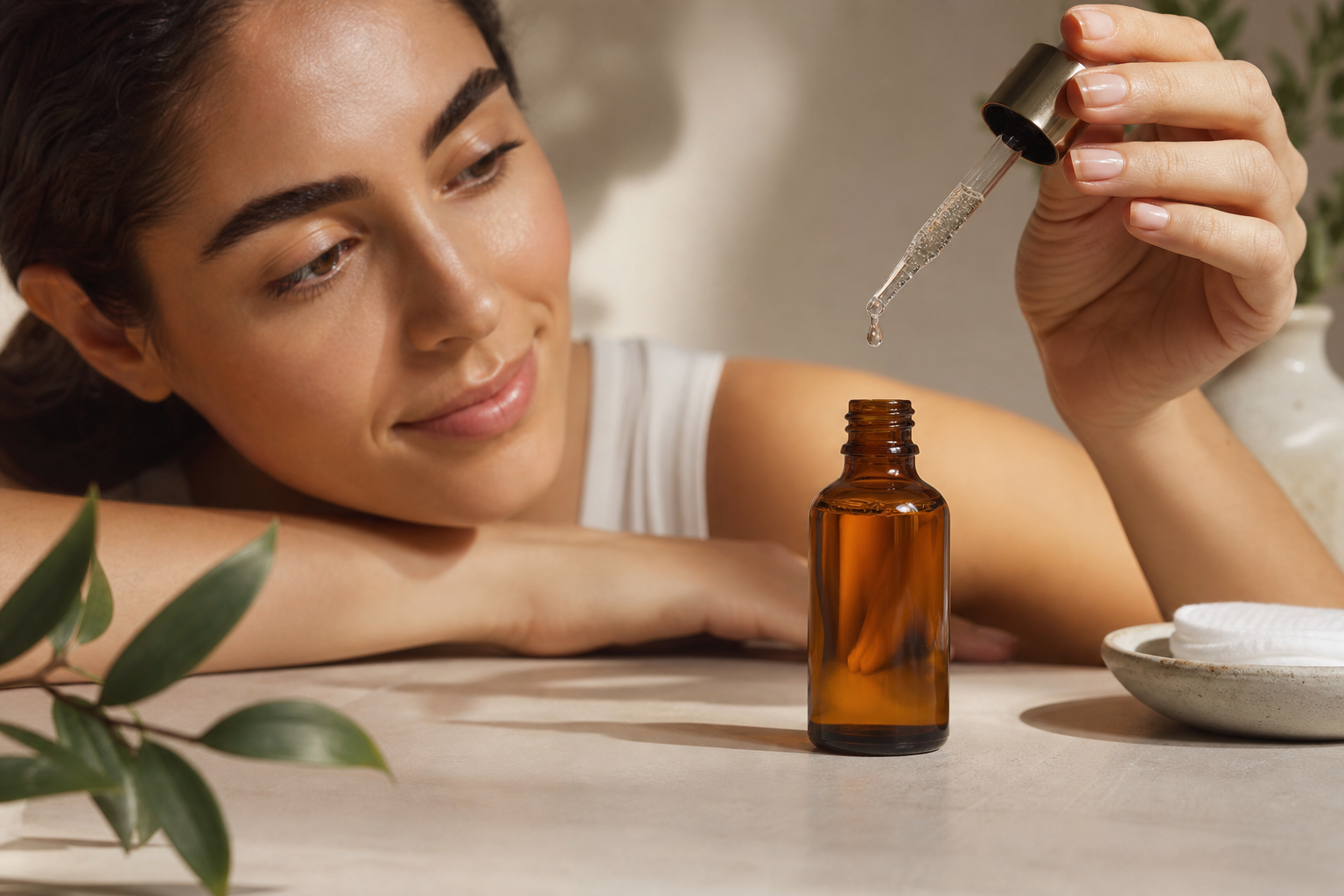
Glycolic acid serums are a common choice for people who want smoother, brighter skin without abrasive scrubbing. This article lists the primary glycolic acid serum benefits, explains how the ingredient works, and gives practical safety and product selection steps so ingredient-conscious shoppers can decide whether to try one.
Glycolic acid is an alpha hydroxy acid that helps dissolve the bonds holding dead skin cells and surface oils, allowing the top layer to shed without abrasive scrubbing. That chemical exfoliation produces a noticeably smoother feel and can reduce roughness on the cheeks, forehead, and nose. The exfoliating action is described in clinical summaries and lay reviews as a primary mechanism for visible texture improvement while avoiding mechanical irritation when used correctly. For a readable overview of the mechanism, see Medical News Today at Glycolic acid for the skin: Benefits and how to use it.
By accelerating surface cell renewal, glycolic acid can help fade dullness and improve the appearance of uneven tone. Regular, controlled use helps reveal newer skin layers that reflect light more evenly, which often reads as improved radiance. This benefit is a function of consistent exfoliation rather than a permanent change to pigmentation, and visible improvement depends on baseline concerns, sun protection, and sustained use.
There is evidence that exfoliating acids can stimulate processes that support collagen synthesis and skin firmness over time. While serums are not medical treatments for volume loss, routine chemical exfoliation can contribute to a firmer appearance when combined with a broader skincare routine that supports barrier health. The effect on collagen is complementary and gradual rather than immediate.
After the top layer of dead cells is reduced, hydrating ingredients such as hyaluronic acid and barrier-supporting molecules can penetrate more effectively. That means glycolic acid serums often work best when formulations include, or are followed by, humectants and ceramides to maintain moisture and protect the skin barrier. Expert commentary on serum selection highlights pairing exfoliation with nourishing, hydrating actives; see the Harvard Health discussion at Skin serum: What it can and can’t do – Harvard Health.
Glycolic acid can loosen and lift sebum and dead cells from pore openings, which helps reduce the feel of occasional surface blemishes and clogged pores. This action is typically milder than prescription exfoliants but useful for routine maintenance. It is not a stand-alone treatment for inflammatory acne, and people with moderate or severe acne should consult a clinician for targeted care.
Because glycolic acid clears the outer layer more predictably than physical scrubs, it is effective at softening rough patches on the face and body, such as around the mouth or jawline where texture builds up. When used with sun protection and moisturizing follow-up, it supports a consistently fresher, more radiant look over time.
Chemical exfoliation uses acid molecules to loosen the bonds that glue dead skin cells together at the surface. Glycolic acid has a small molecular size, which helps it access and affect the uppermost layers of skin without mechanical abrasion. This is why it removes the top layer of dead cells without the microtears that scrubbing can cause. For a clear explanation of the process, see Medical News Today at Glycolic acid for the skin: Benefits and how to use it.
The effect of a glycolic acid serum depends on the formula, pH, and the concentration of the active ingredient. Lower concentrations and a balanced formulation give gentler, daily-use exfoliation, while higher strengths can increase efficacy and irritation risk. Always follow the product label and introduce the serum in a stepwise way to judge tolerance.

These groups typically see the most consistent glycolic acid serum benefits when they use the product as directed and protect their skin from sun exposure.
People with active rosacea, very sensitive skin conditions, open wounds, or who recently had chemical peels or laser procedures should be cautious. If you are pregnant, breastfeeding, or using prescription topical or oral treatments, consult a dermatologist before adding strong exfoliants. Clinical reviews recommend professional input for complex or inflammatory skin conditions.
If you experience persistent redness, burning, swelling, or severe irritation, stop use and consult a clinician. For mild stinging or temporary redness, reduce frequency and apply a soothing, fragrance-free moisturizer until the skin calms.

Apply a pea-sized amount to a discreet area such as the jawline or inner forearm and observe for 24 to 48 hours. No reaction suggests basic tolerance, though face sensitivity can differ from other sites.
Begin with once or twice weekly at night, then increase to alternate nights as tolerated. Avoid daily use until you know how your skin responds. If irritation appears, step back to less frequent application and rebuild slowly.
Nighttime use is common because glycolic acid can increase temporary sun sensitivity. If used in the morning, pair with broad spectrum sun protection and reapply sunscreen according to its directions.
After cleansing, apply a glycolic acid serum and allow it to absorb before adding hydrating serums like hyaluronic acid or barrier-supporting creams containing ceramides, niacinamide, or vitamin E. Harvard Health recommends combining exfoliants with supportive humectants and barrier actives for dryness and texture issues. If you plan to use multiple active serums, introduce each new product separately so you can monitor tolerance.
This checklist helps you compare serums without ranking specific products. It is an evaluative, non-ranking guide to attributes you can verify on labels and brand pages.
Check that the product lists glycolic acid among active ingredients and shows supporting components, including humectants and soothing agents. Transparency helps you anticipate interactions with other products in your routine.
Brands sometimes publish pH or formulation notes. Lower pH increases exfoliation strength, and stable formulations avoid unnecessary irritants. If the brand does not state pH, look for usage guidance and tolerability notes on the label or product page.
Prefer serums that include or are easy to pair with hyaluronic acid, ceramides, niacinamide, or vitamin E to support hydration and reduce irritation risk. Expert guidance highlights these supportive ingredients when choosing serums for dryness or texture concerns.
Airless pumps or opaque droppers reduce oxidation and contamination compared to open jars, which helps preserve ingredient effectiveness and shelf life.
If cruelty-free status or made-in-North-America manufacturing is important to you, confirm those claims on the brand site or product page. Oria Botanica lists its clean, cruelty-free positioning and North American manufacturing on its website, which may factor into purchase decisions; visit the official website for brand details.
Choose products with explicit usage instructions, tolerance guidance, and a retailer return policy that protects first-time buyers.
Oria Botanica lists a Glycolic Acid Serum among its skincare offerings and positions itself as a clean beauty brand selling botanical products through an online store. The site highlights cruelty-free formulations and North American manufacturing, plus shipping information to support online shopping. To evaluate product details, directions, and ingredients, visit the Oria Botanica website at the official website. Always consult a clinician for medical concerns.
Glycolic acid chemically exfoliates by dissolving the bonds between dead skin cells on the surface, which lifts the top layer and reveals smoother, fresher skin. For a plain language overview, see Medical News Today at Glycolic acid for the skin: Benefits and how to use it.
People with active rosacea, very sensitive or broken skin, recent facial procedures, or those on prescription topical or oral skin medications should consult a clinician. Pregnant or breastfeeding people should also seek professional advice before starting new exfoliants.
Some people notice smoother texture after a few uses, while cumulative benefits such as improved tone and radiance develop over several weeks with regular, safe use. Individual results vary with skin type, formulation, and consistency of use.
Yes. The FDA recommends using sunscreen, wearing protective clothing, and limiting sun exposure while using alpha hydroxy acid products and for about a week afterwards to reduce photosensitivity risks. See the FDA guidance at Alpha Hydroxy Acids | FDA.
Glycolic acid pairs well with hydrating and barrier-supporting actives such as hyaluronic acid and niacinamide when used thoughtfully. Vitamin C can be part of a routine, but if combining strong actives, introduce them one at a time and monitor tolerance. Harvard Health offers guidance on serum selection and pairing at Skin serum: What it can and can’t do – Harvard Health.
Ready to explore options? Visit Oria Botanica to view the Glycolic Acid Serum, check ingredient and usage details, and learn about shipping and returns.