

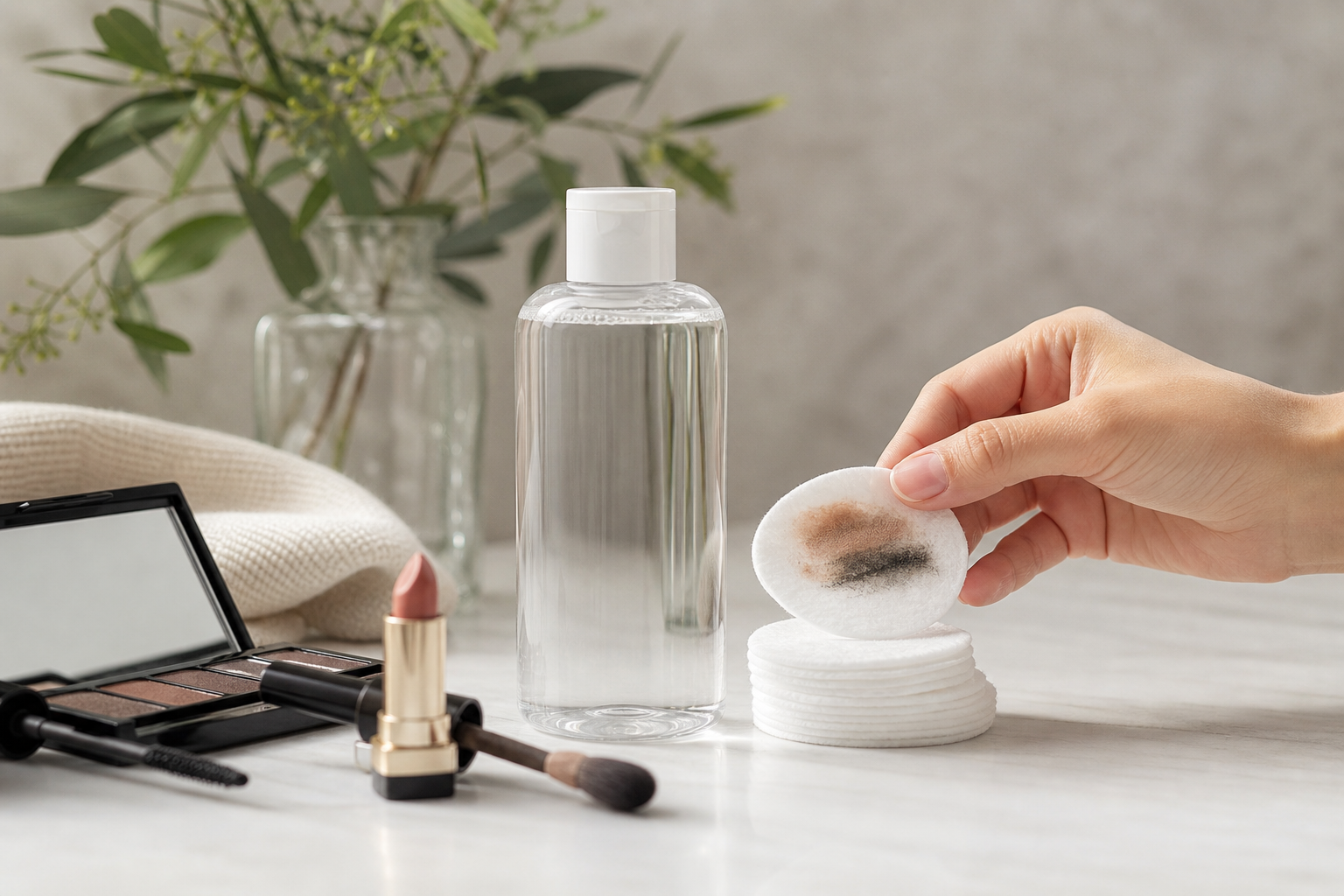
Choosing the right makeup remover solution matters more than picking a pretty bottle. Ingredient-conscious shoppers who prefer clean beauty and cruelty-free cosmetics want a remover that clears makeup without stripping or irritating skin, handles waterproof formulas when needed, and fits into a low-waste routine. Oria Botanica lists a branded Makeup Remover Solution among its botanical skincare options. The checklist below helps you compare types, ingredients, application, and ethical features so you can decide with confidence.
This is a non-ranking decision checklist built to help you compare remover formats and features. It does not endorse one product above others. Where useful I mention established resources by name to clarify safety and formulation topics, including micellar comparisons and regulatory context; those are cited for explanation, not as endorsements.

Start by matching the remover format to the kind of makeup you wear and how you like to cleanse. High-level differences:
Decision prompt: if you often wear waterproof mascara or long-wear eyeliners, prioritise an oil or dual-phase remover. If you want a fast, gentle step that does not require immediate rinsing, micellar water may be the simplest match.
The eye area is delicate. To reduce tugging and irritation, choose a remover designed for eyes and follow a gentle technique: soak a cotton pad, press it on the lash line for a few seconds, then wipe downwards rather than scrubbing. Oil-based or dual-phase formulas are typically more effective at dissolving waterproof mascara without aggressive rubbing; micellar water can work when makeup is not long-wear.
If you wear lash extensions or have chronically irritated eyes, search for a remover explicitly labelled safe for extensions or formulated for sensitive eyes and avoid strong solvents.
Ingredient transparency is essential for clean beauty shoppers. Use these quick rules when reading labels:
Preservatives are necessary in water-containing products to prevent microbial growth. Lack of preservative listing should not be interpreted as a purity advantage. If you want a branded option with clear ingredient transparency, review Oria Botanica product pages for full INCI lists before buying.
Your skin type should guide whether you accept a residual emollient finish. Typical matches:
Tip: test a small area on your jawline and observe pore response over a few days before making the product part of your routine.
Clean beauty buyers often weigh ethics and environmental impact alongside performance. Consider these factors:
Reducing waste can be as simple as switching from disposable wipes to reusable cotton pads plus a concentrated liquid or balm in recyclable packaging.
Decide whether the remover will be your only cleansing step or the first in a double-cleanse. Common approaches:
Apply eye makeup remover first, then cleanse the whole face. If you follow with active treatments such as acids or targeted serums, ensure the cleanser you choose leaves the skin in the right state for those actives, and follow any manufacturer directions about wait times and pH considerations.
Before regular use, run quick safety checks:
Keep bottles capped between uses and avoid adding water to pump dispensers to minimise contamination risk.
Work through the seven checks with a specific product in mind. For example, if you wear waterproof eye makeup and have dry skin, a gentle oil or balm with a known preservative system and recyclable packaging will meet most priorities. If you favour a no-rinse step after gym classes and prefer minimal residue, a fragrance-free micellar water that lists mild solubilizers high on the ingredient list may be a better fit. Oria Botanica lists a Makeup Remover Solution among its botanical offerings if you want a branded option to evaluate against this checklist.
Micellar water is often formulated to be gentle and suitable for sensitive eyes, but check the label for statements such as “ophthalmologist tested” or “suitable for sensitive eyes” and avoid fragrance. Use a gentle removal technique to reduce rubbing and irritation.
Oil cleansers do not automatically cause breakouts. Look for non-comedogenic oils and an emulsifying formula that rinses clean or is removed in a double cleanse. Test on a small area and monitor pores over a few days to confirm compatibility.
Use an oil or dual-phase remover on a saturated cotton pad, hold the pad over the lashes for a few seconds to dissolve the product, then gently wipe downward. Repeat if needed. This reduces friction and helps protect the delicate lash area.
Wipes can be convenient but generally produce more waste and sometimes contain stronger preservatives or surfactants. If environmental impact is a concern, choose biodegradable or compostable wipes or switch to reusable pads and a concentrated liquid or balm.
Double cleanse on days you wear heavier makeup, sunscreen, or after a sweaty workout. After cleansing and patting skin dry, apply targeted treatments like serums or eye cream according to product instructions. Wait times and pH concerns are product dependent, so follow manufacturer guidance for actives.

If you want to compare a clean, cruelty-free option against this checklist, visit Oria Botanica to view their Makeup Remover Solution and botanical skincare collection.